Press: data, charts and how to cite
All Iberómetro content can be reused with attribution (CC BY 4.0). Here are the data from the latest edition, publication-ready charts and how to cite.
Latest index edition: November 2026
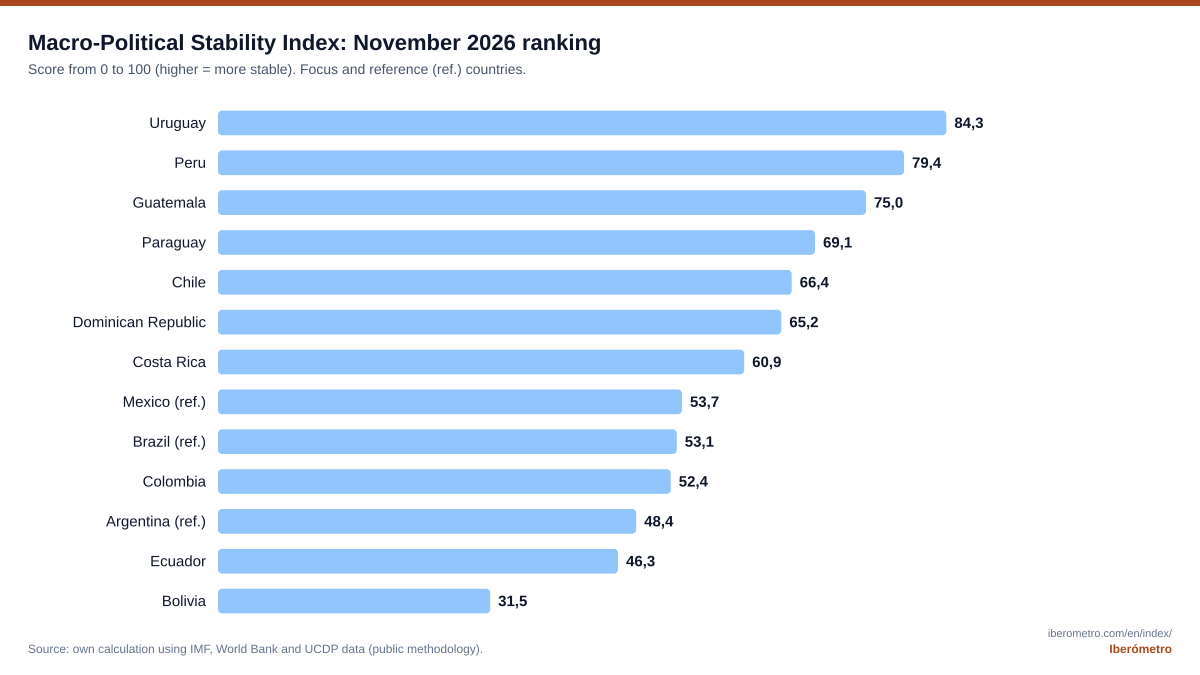
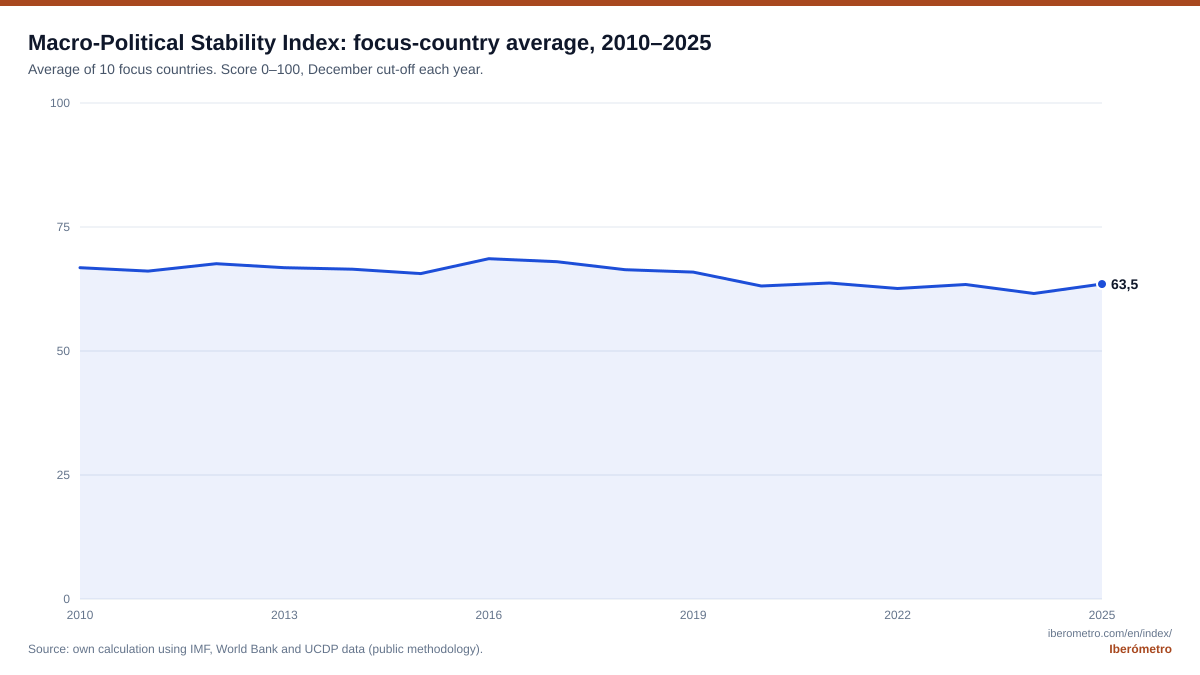
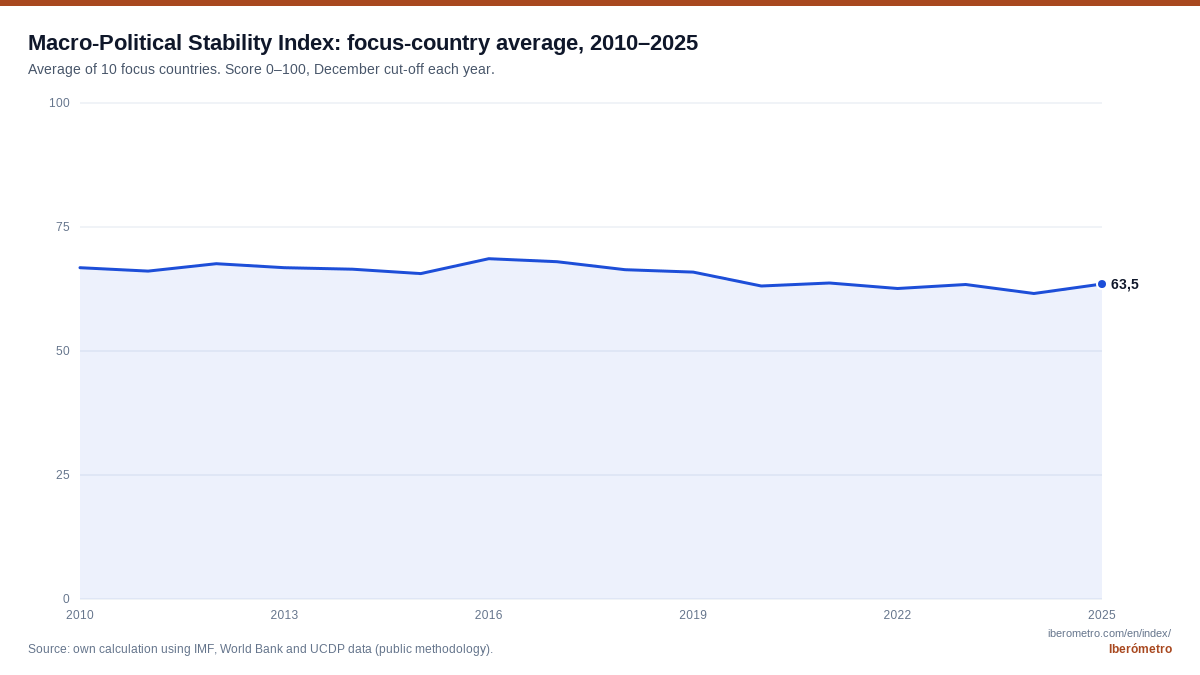
In the November 2026 edition of the Macro-Political Stability Index, the average of the 10 focus countries is 63.1 out of 100 (−0.4 points compared with the end of 2025).
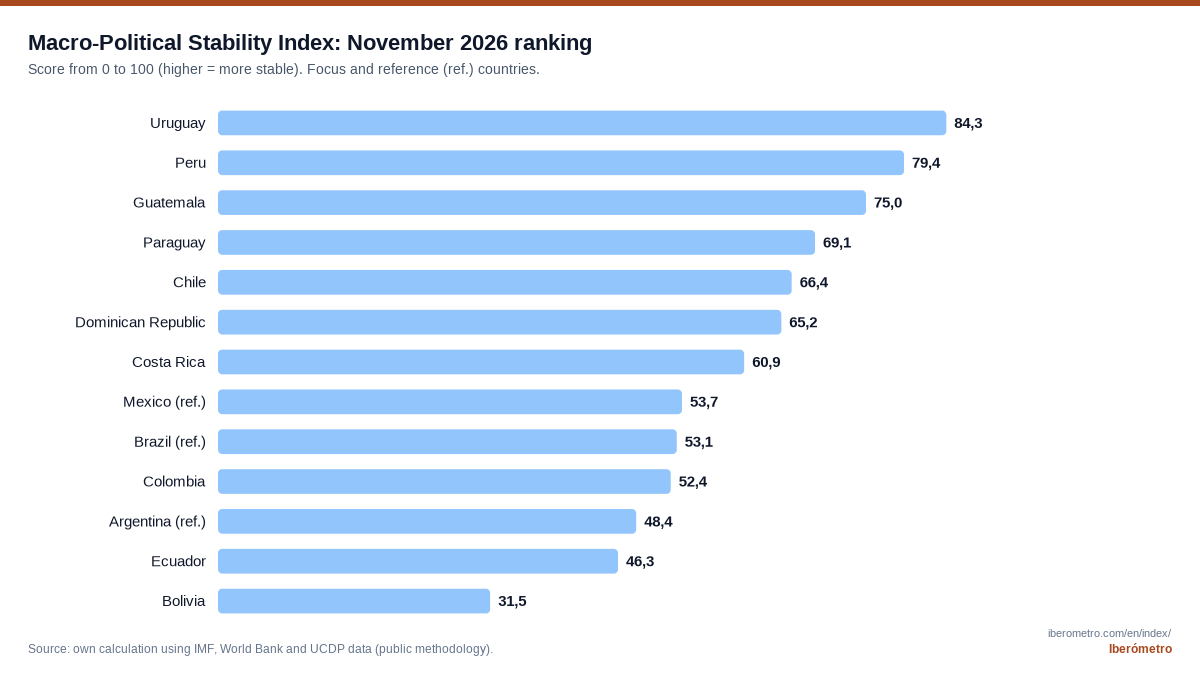
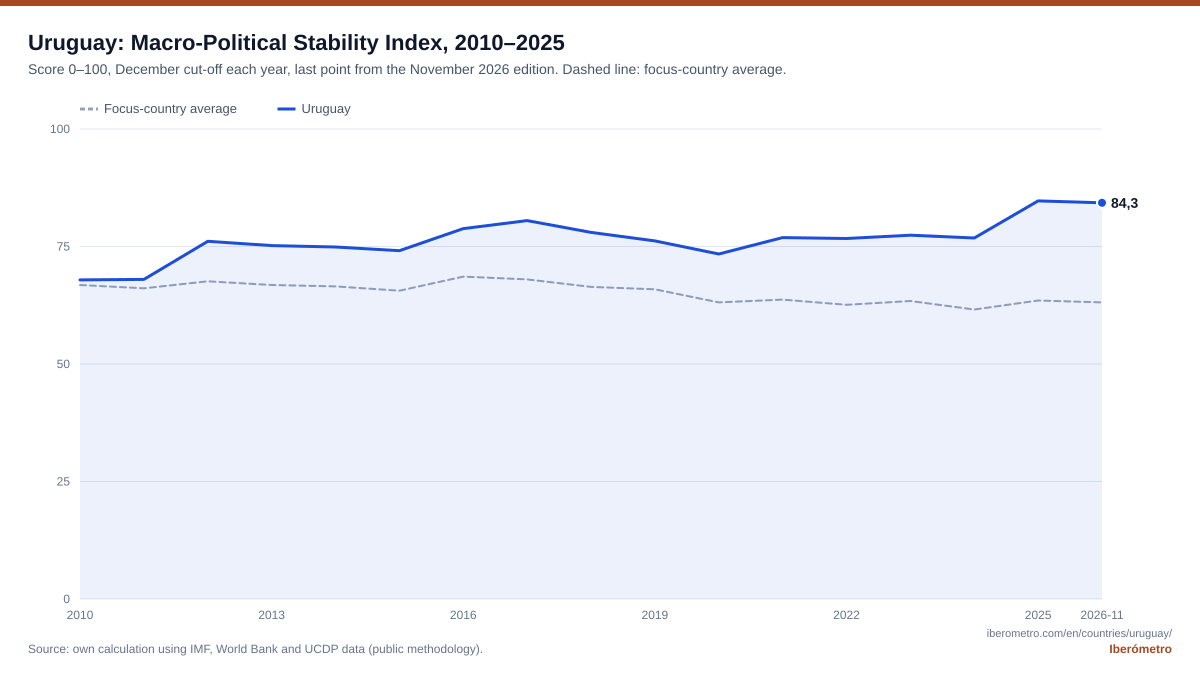
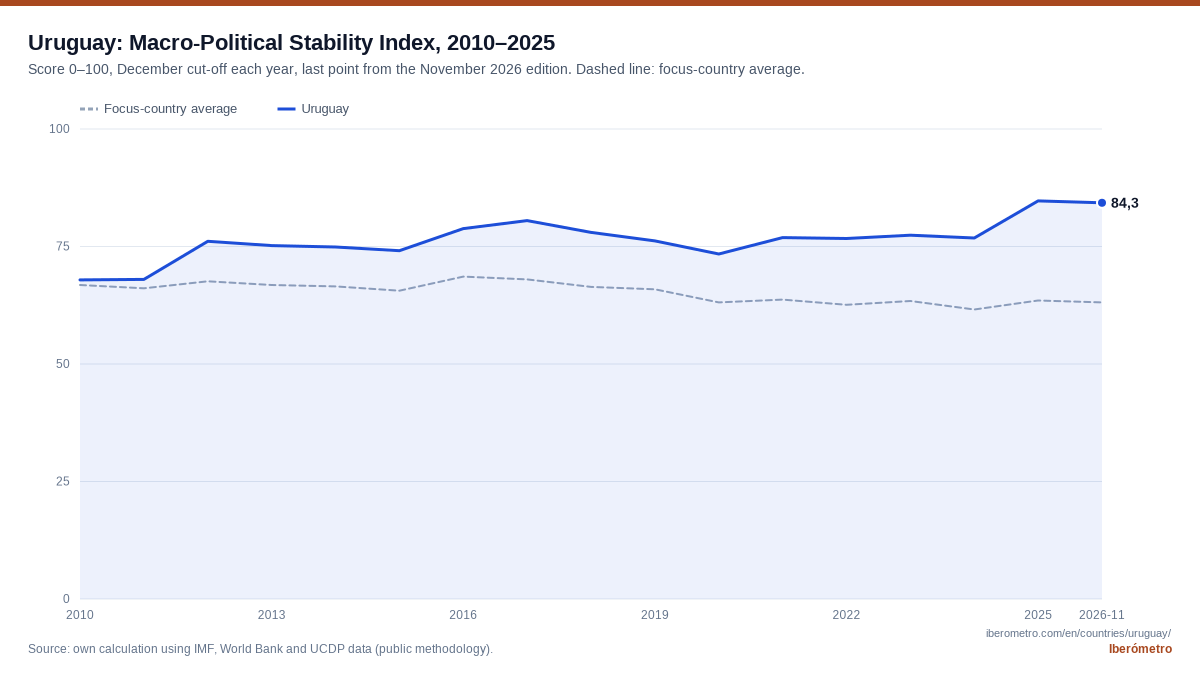
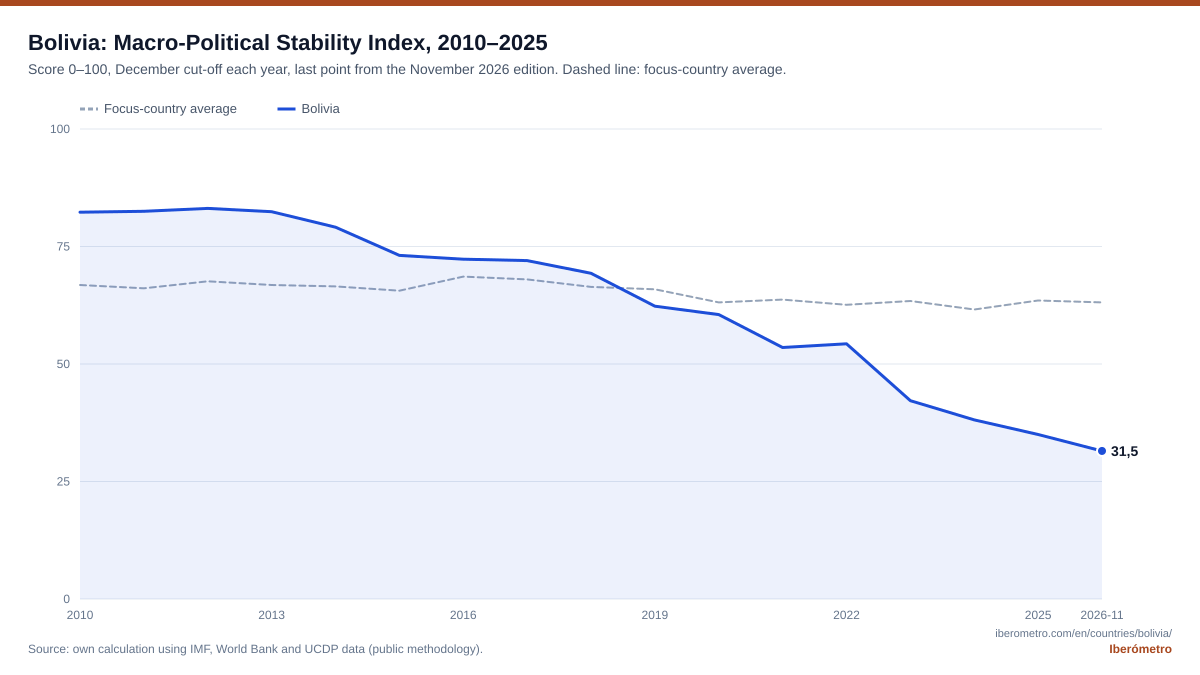
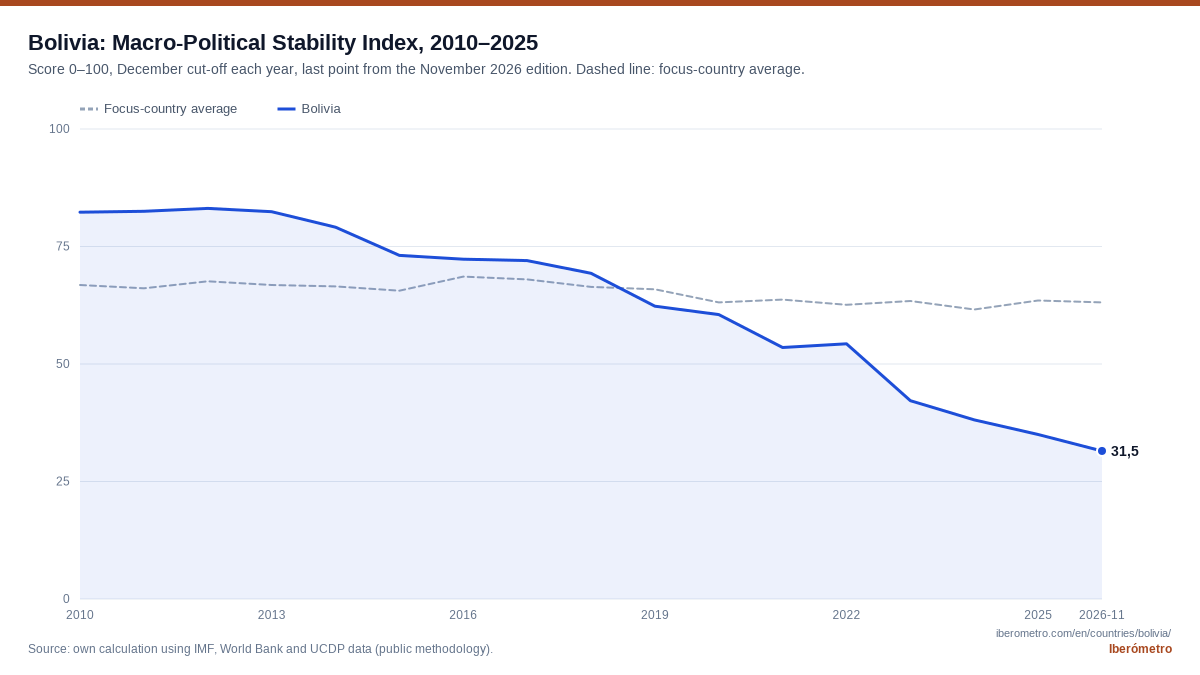
Uruguay tops the ranking (84.3) and Bolivia comes last (31.5).
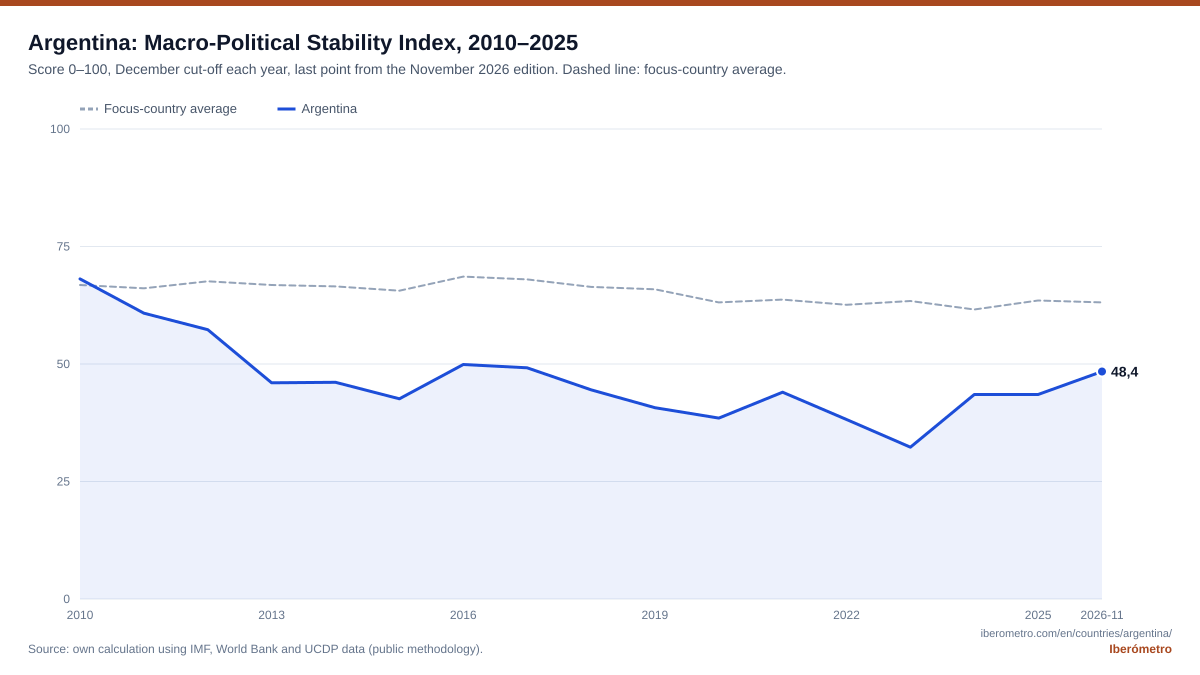
Compared with the end of 2025, the largest rise is Argentina (+4.9 points, mainly due to the monetary and external stability pillar) and the largest fall is Bolivia (−3.5 points, mainly due to the monetary and external stability pillar).
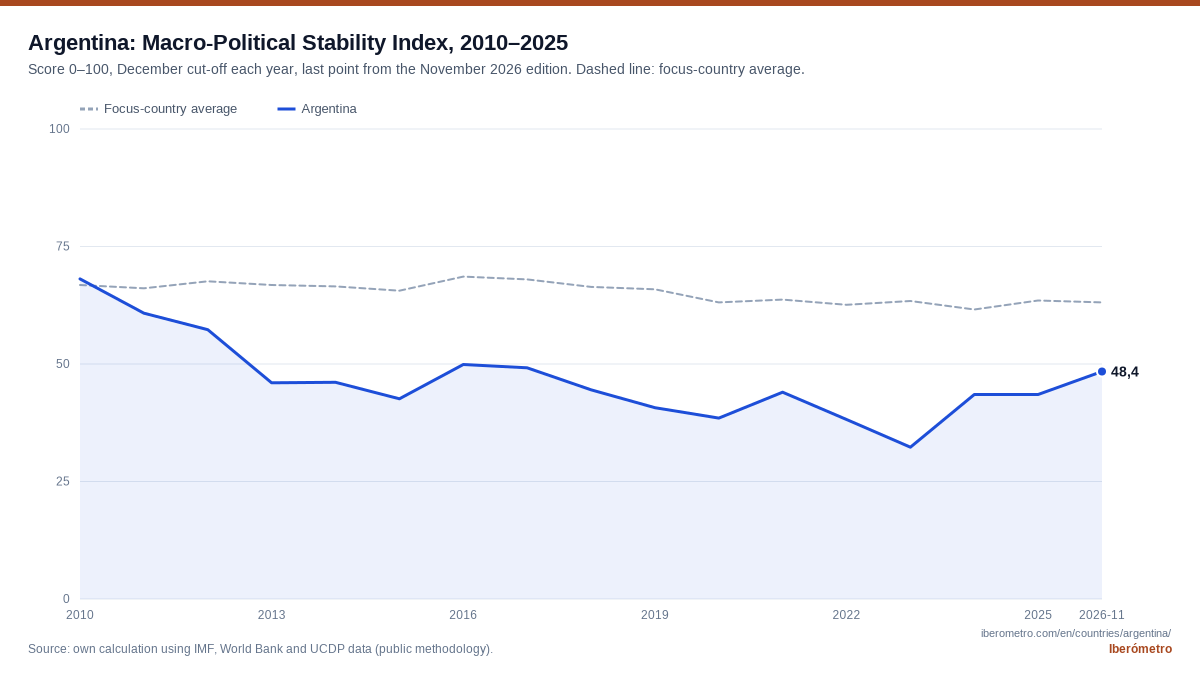
- Argentina: 48.4 (+4.9 points compared with the end of 2025; moves from position 12 to 11). The pillar contributing most is monetary and external stability (+19.7 points in the pillar).
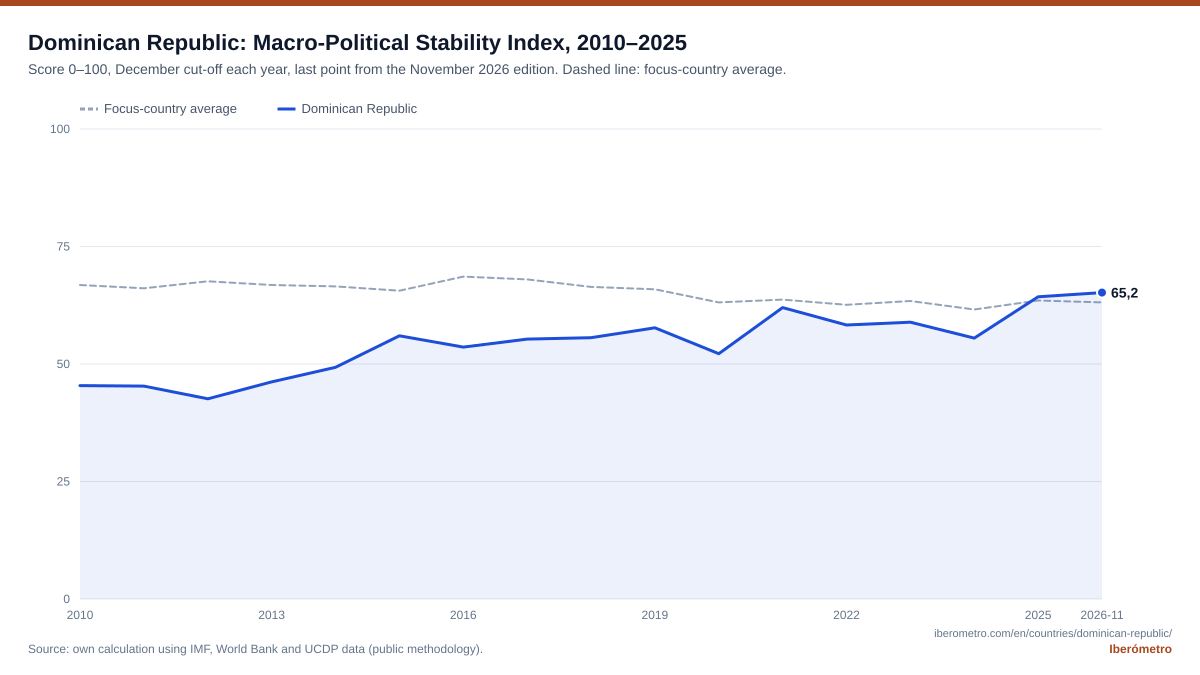
- Dominican Republic: 65.2 (+0.9 points compared with the end of 2025; stays in position 6). The pillar contributing most is monetary and external stability (+3.6 points in the pillar). It is the highest value in its series since 2010.
- Bolivia: 31.5 (−3.5 points compared with the end of 2025; stays in position 13). The pillar contributing most is monetary and external stability (−13.9 points in the pillar). It is the lowest value in its series since 2010.
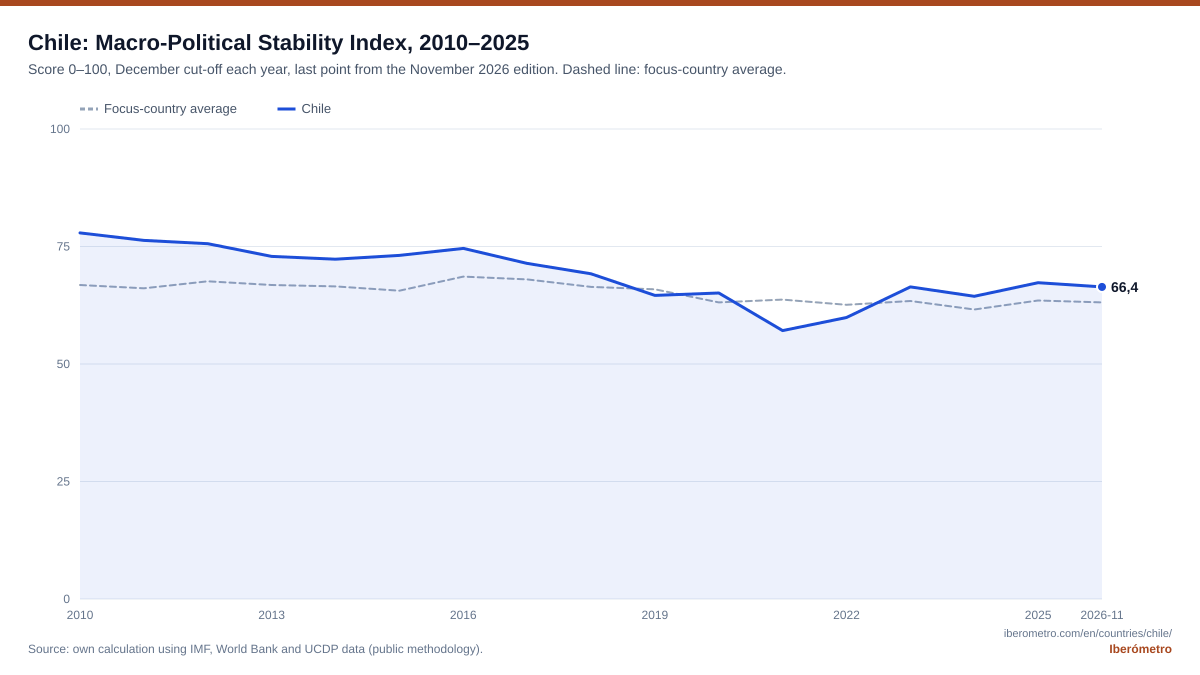
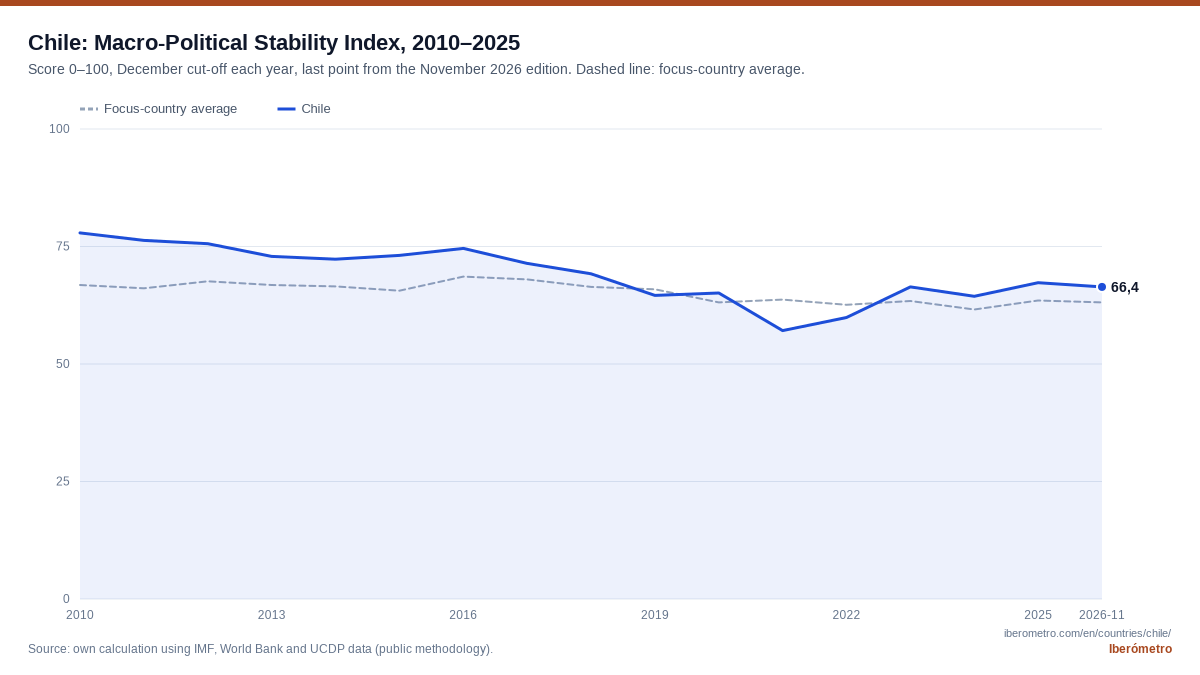
- Chile: 66.4 (−0.9 points compared with the end of 2025; stays in position 5). The pillar contributing most is monetary and external stability (−3.5 points in the pillar).
Full edition · data in CSV and JSON · new edition alerts (Atom/RSS)
Ready-to-use charts
1200 × 675 px PNG and editable SVG, with the source and site name built in. They can also be embedded with an iframe.
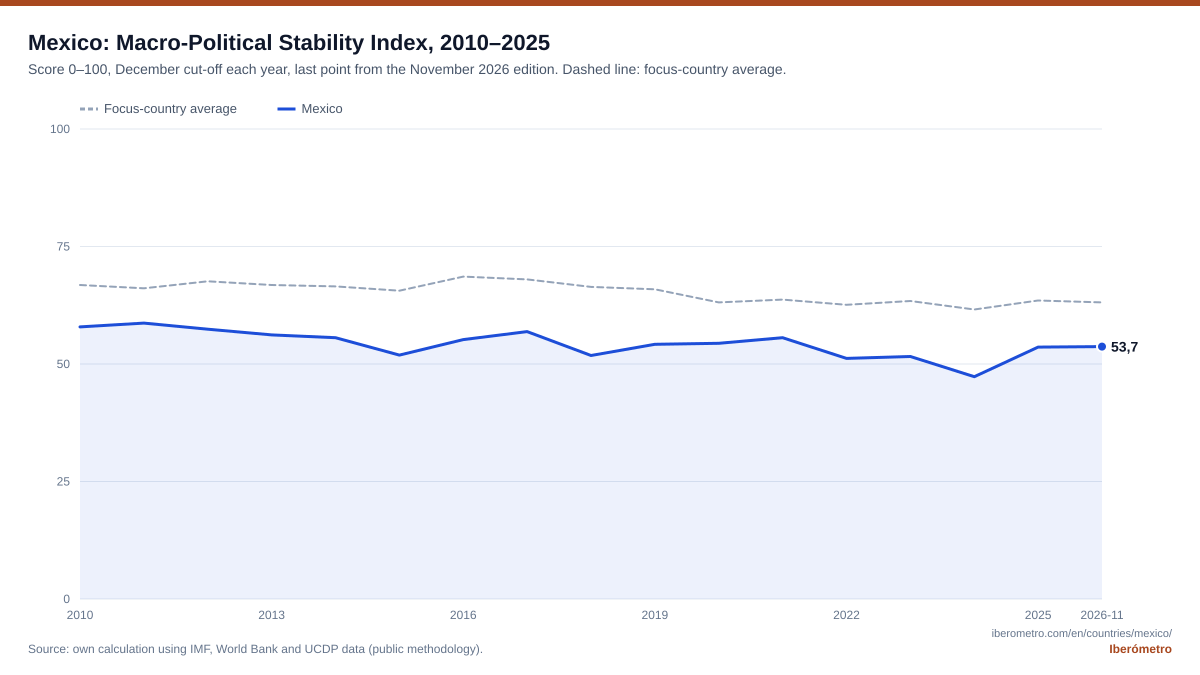
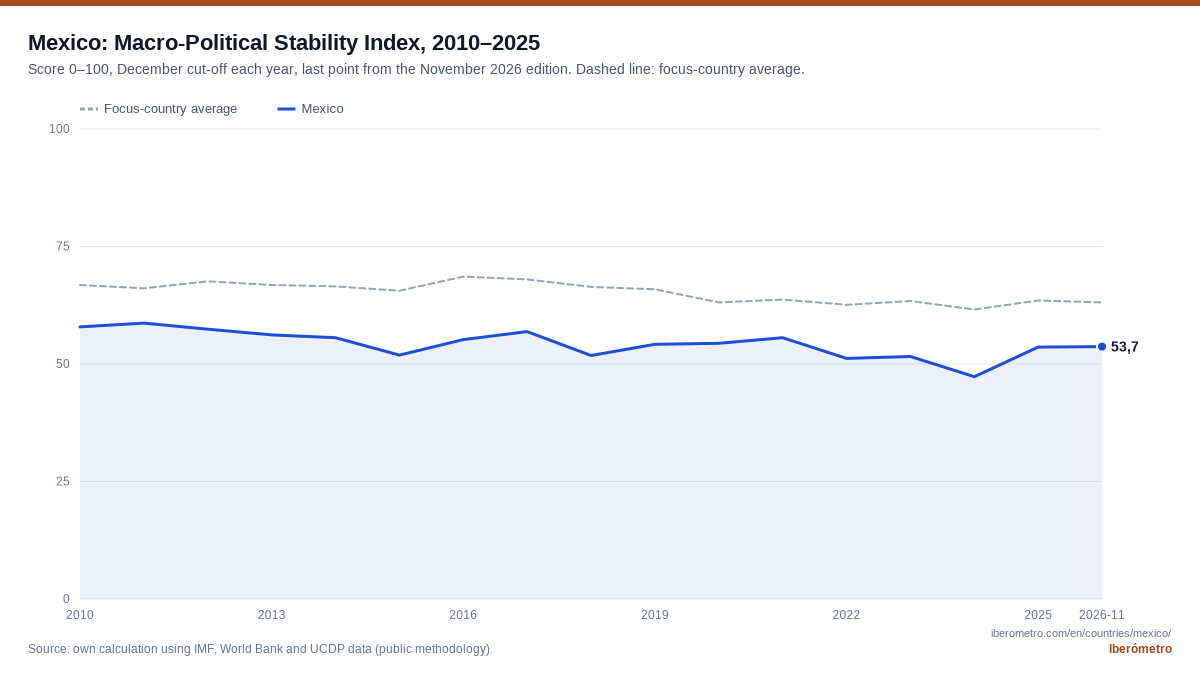
PNG · SVG · embed · source page
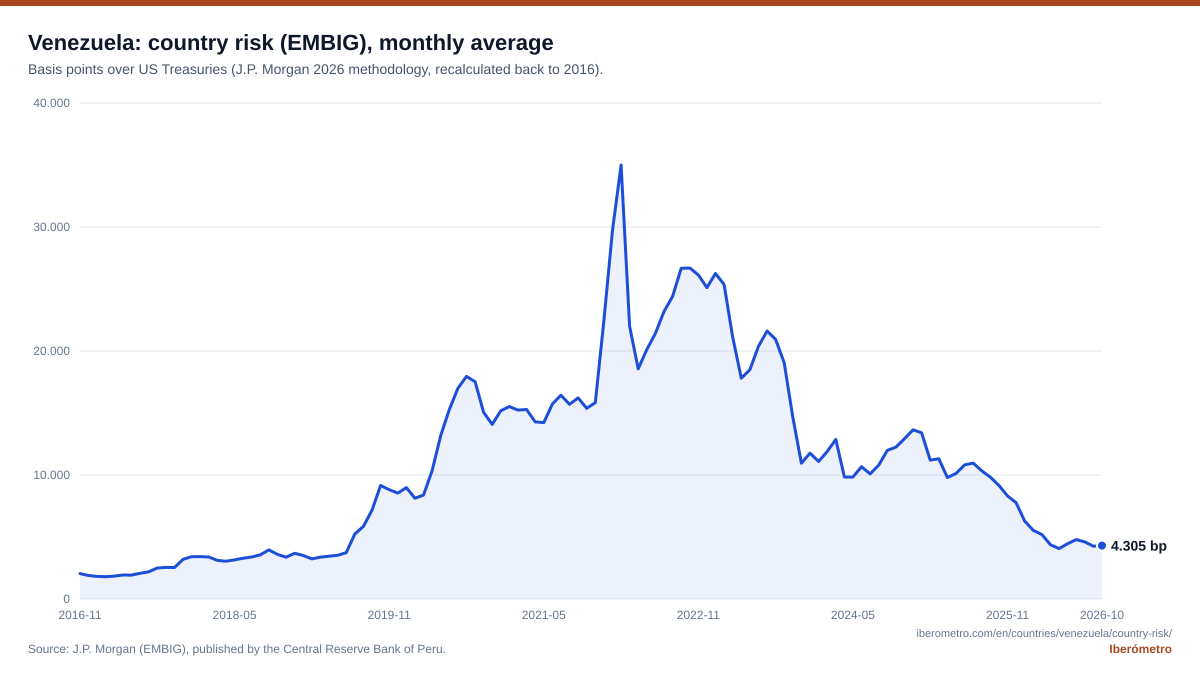
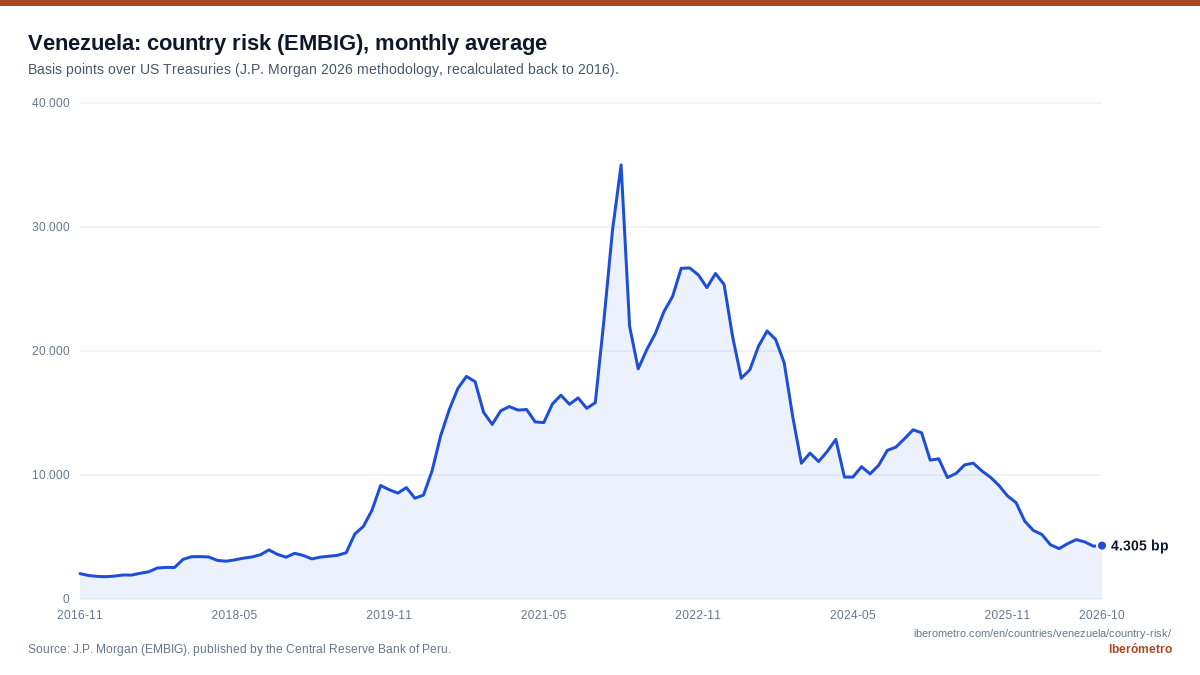
PNG · SVG · embed · source page
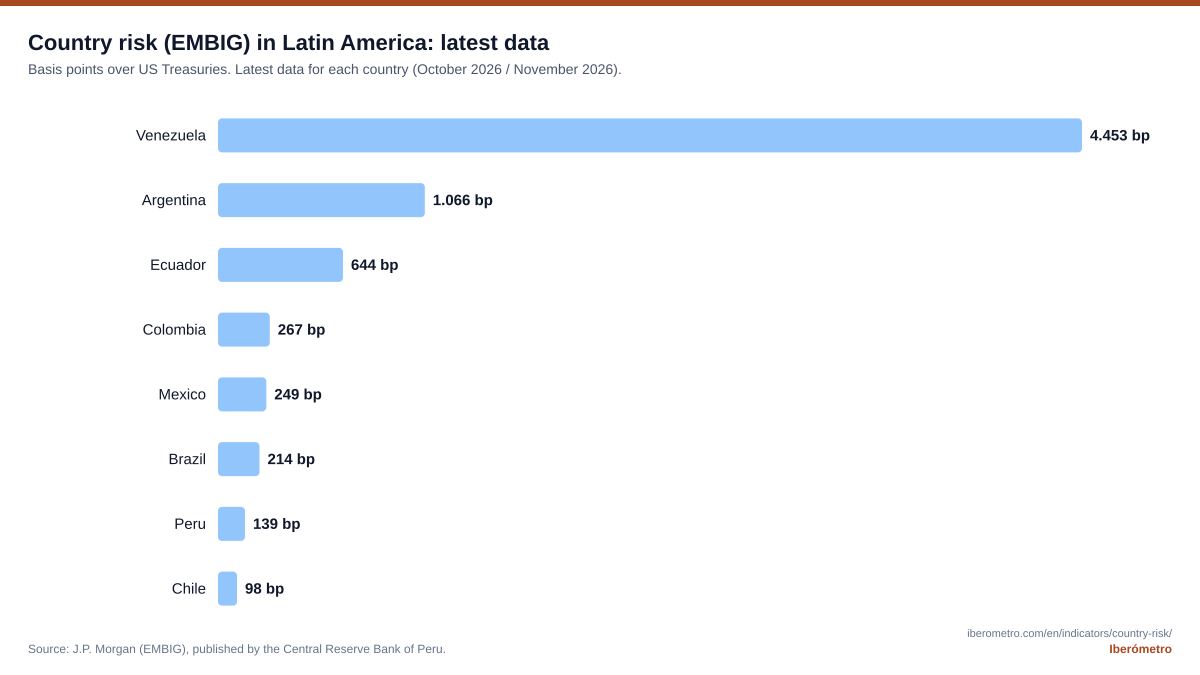
PNG · SVG · embed · source page
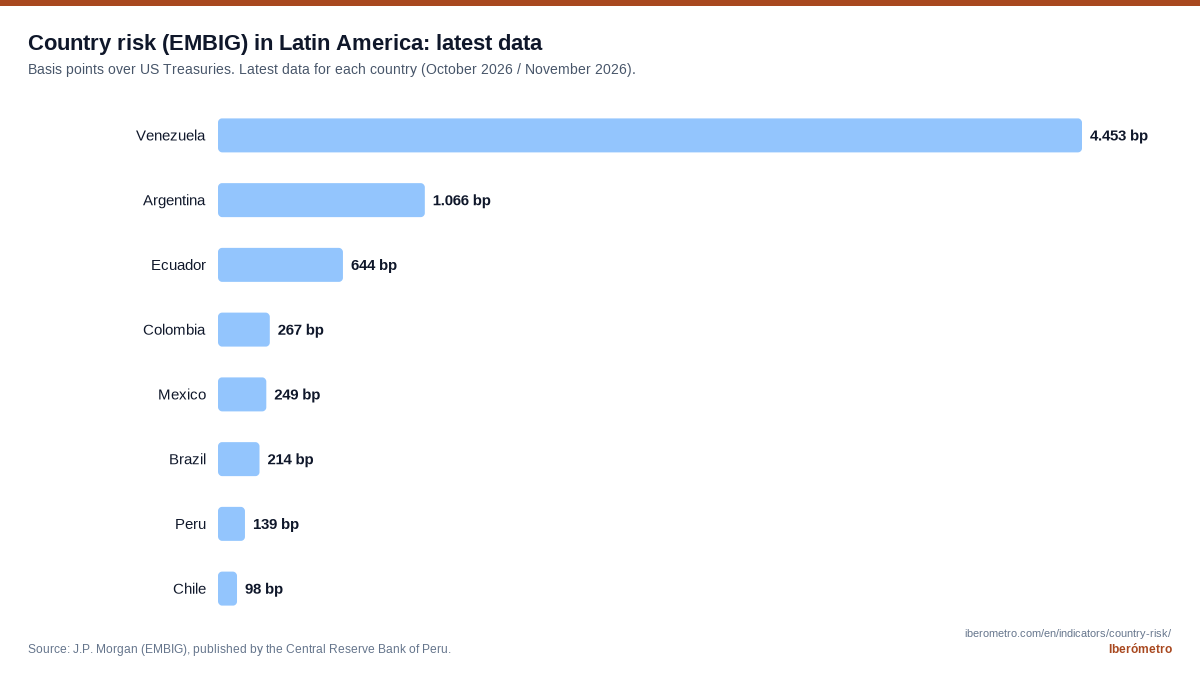
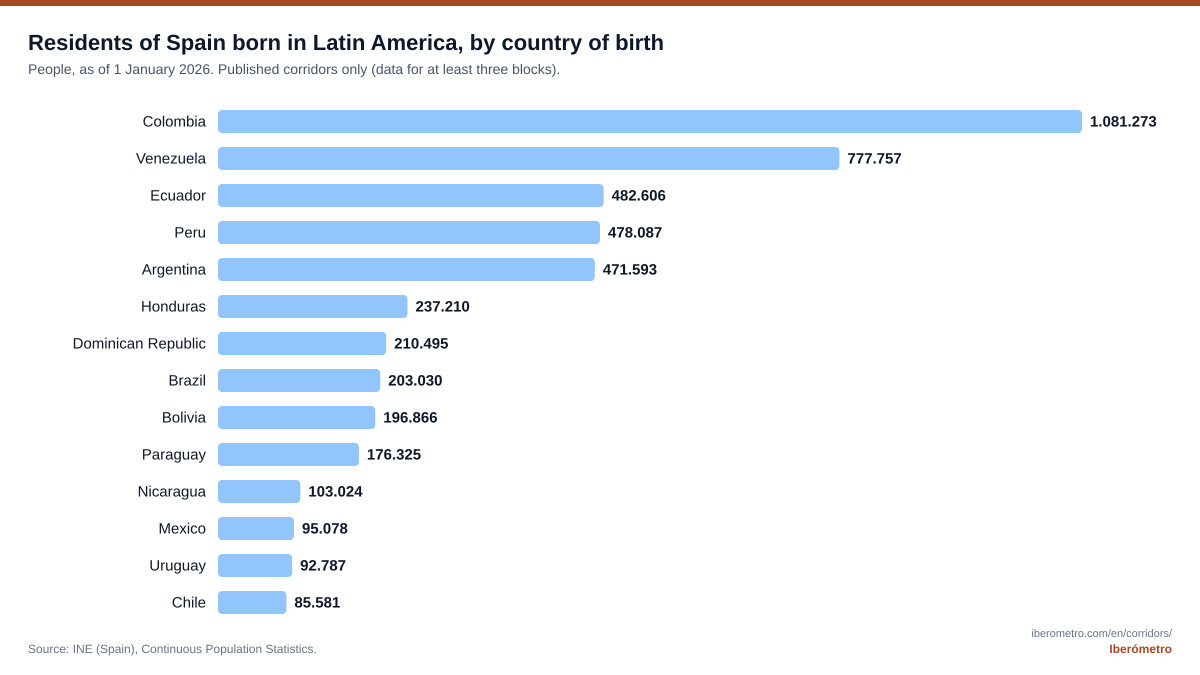
PNG · SVG · embed · source page
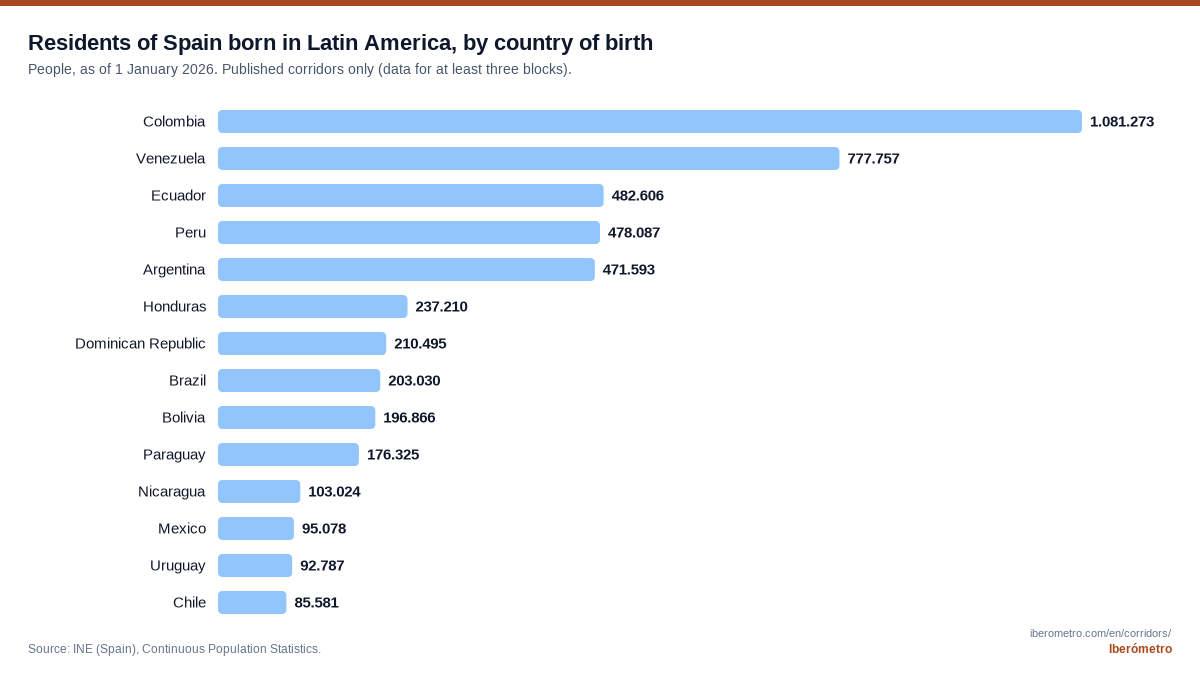
More charts by country (21)
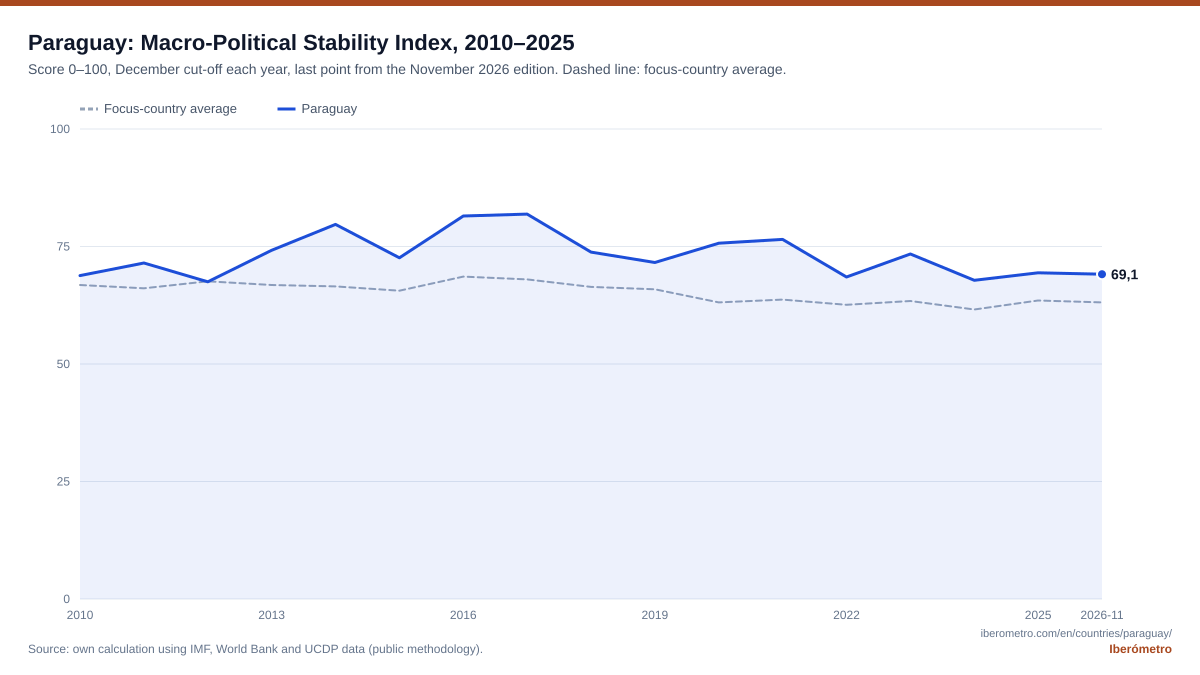
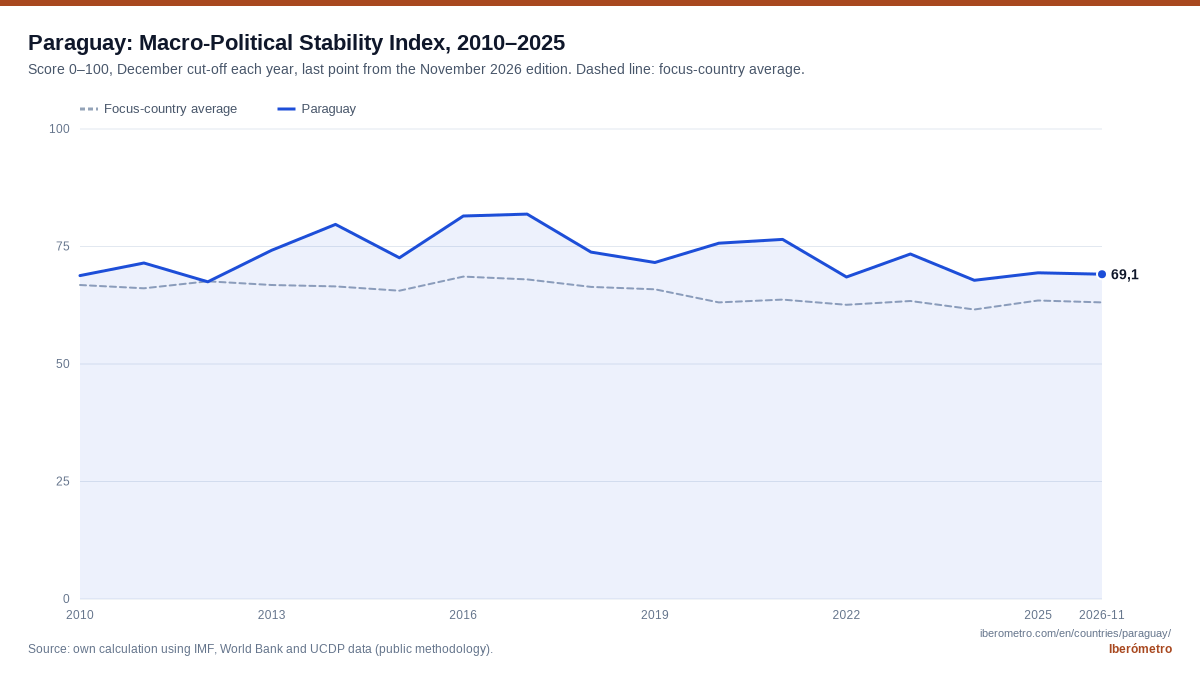
- Paraguay: Macro-Political Stability Index, 2010–2025: PNG · SVG · embed
- Uruguay: Macro-Political Stability Index, 2010–2025: PNG · SVG · embed
- Bolivia: Macro-Political Stability Index, 2010–2025: PNG · SVG · embed
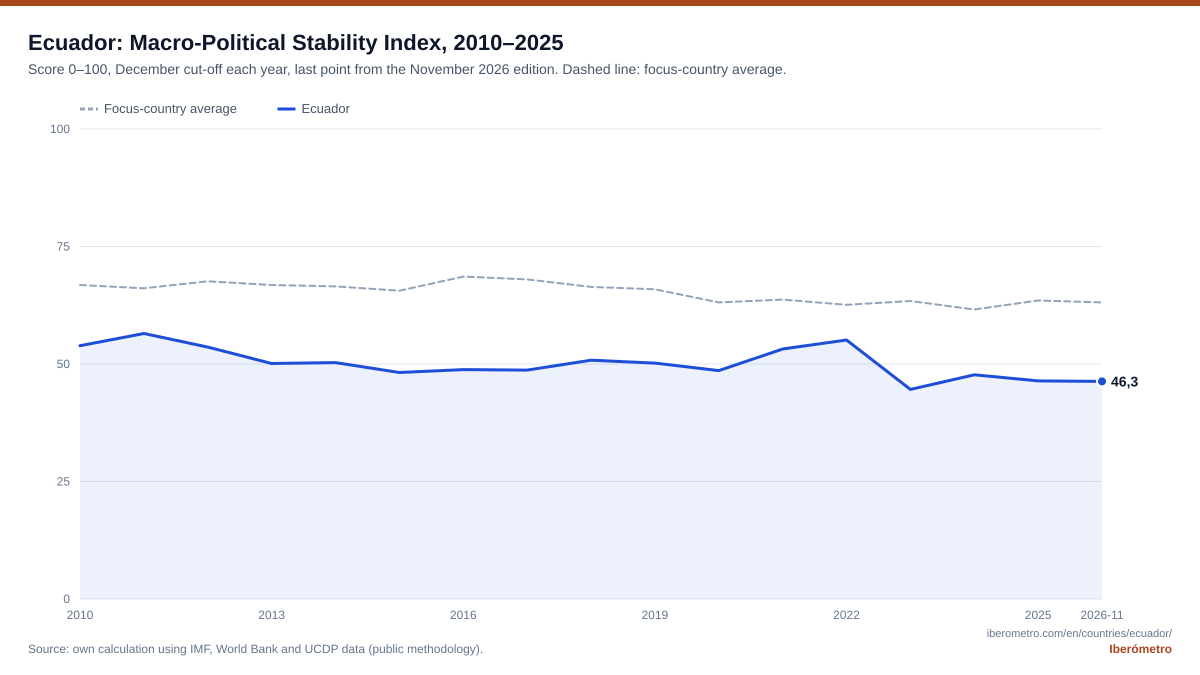
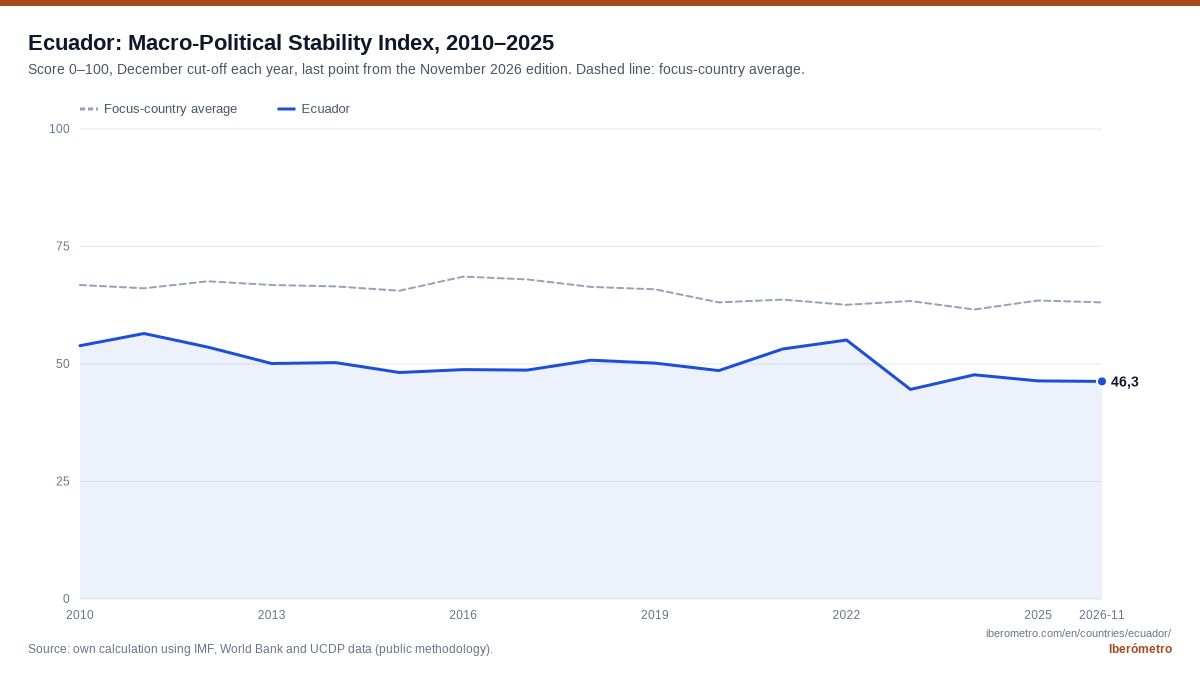
- Ecuador: Macro-Political Stability Index, 2010–2025: PNG · SVG · embed
- Peru: Macro-Political Stability Index, 2010–2025: PNG · SVG · embed
- Colombia: Macro-Political Stability Index, 2010–2025: PNG · SVG · embed
- Chile: Macro-Political Stability Index, 2010–2025: PNG · SVG · embed
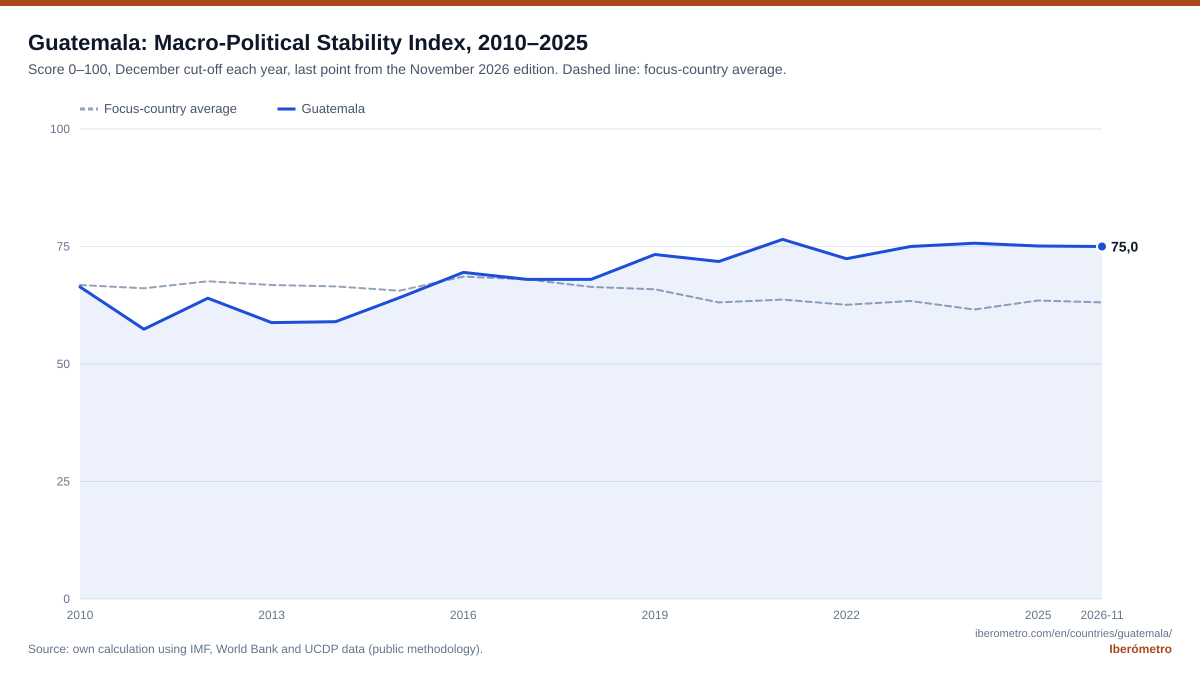
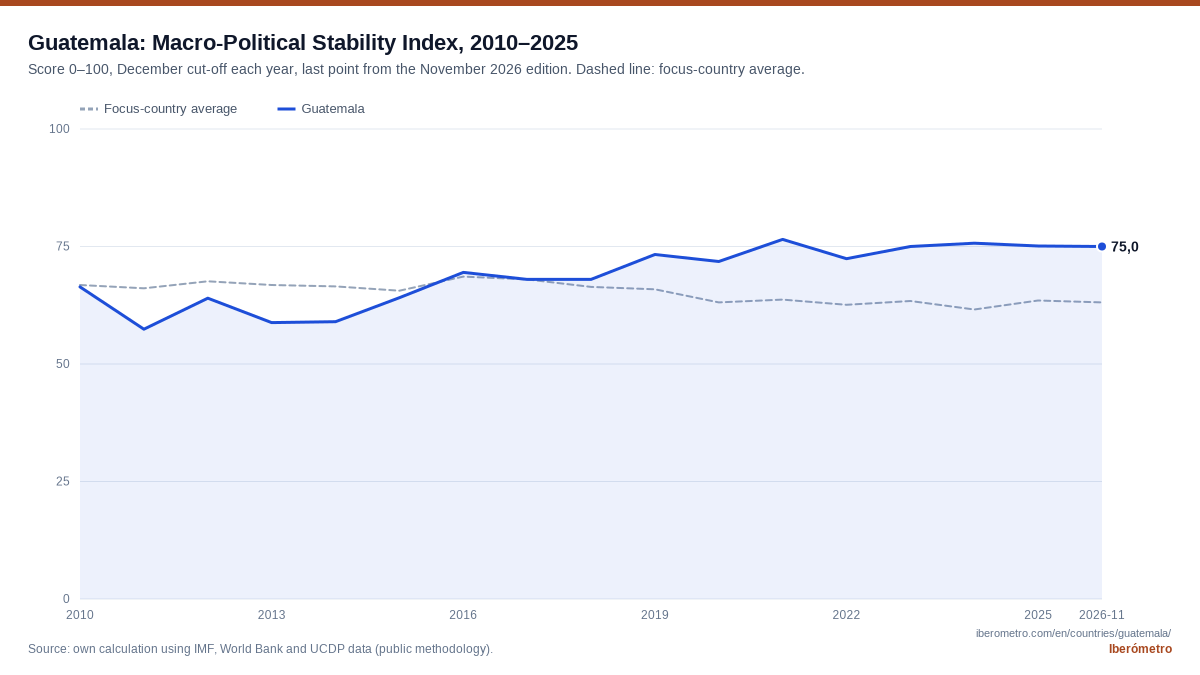
- Guatemala: Macro-Political Stability Index, 2010–2025: PNG · SVG · embed
- Dominican Republic: Macro-Political Stability Index, 2010–2025: PNG · SVG · embed
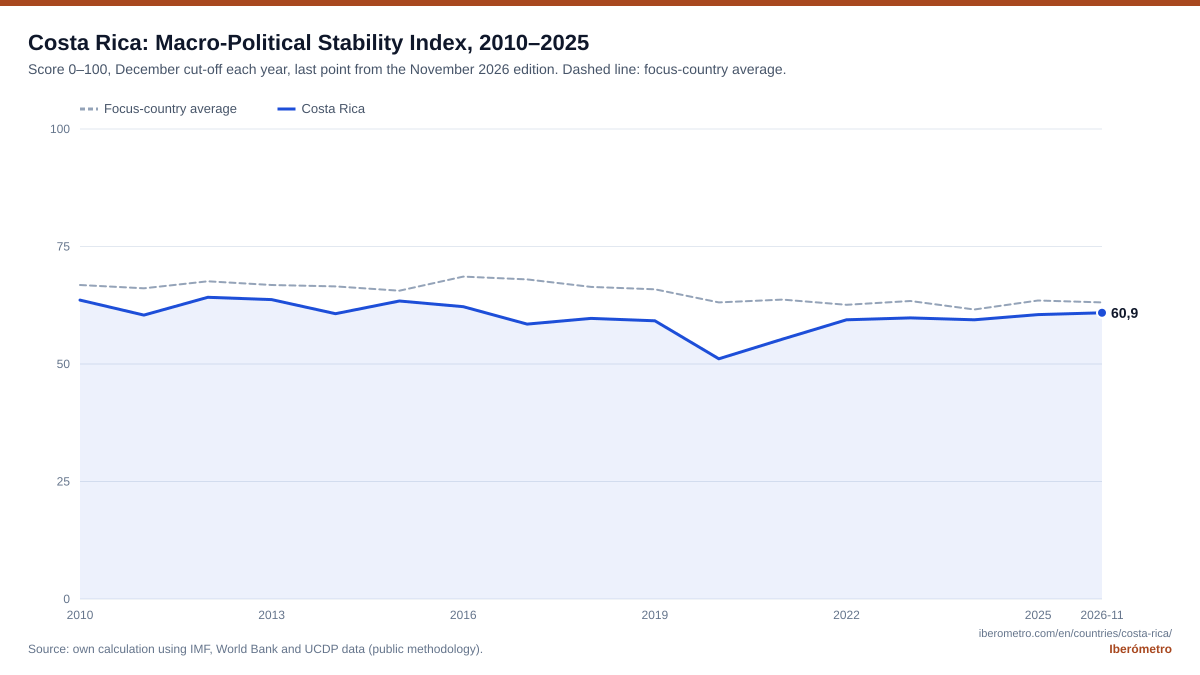
- Costa Rica: Macro-Political Stability Index, 2010–2025: PNG · SVG · embed
- Argentina: Macro-Political Stability Index, 2010–2025: PNG · SVG · embed
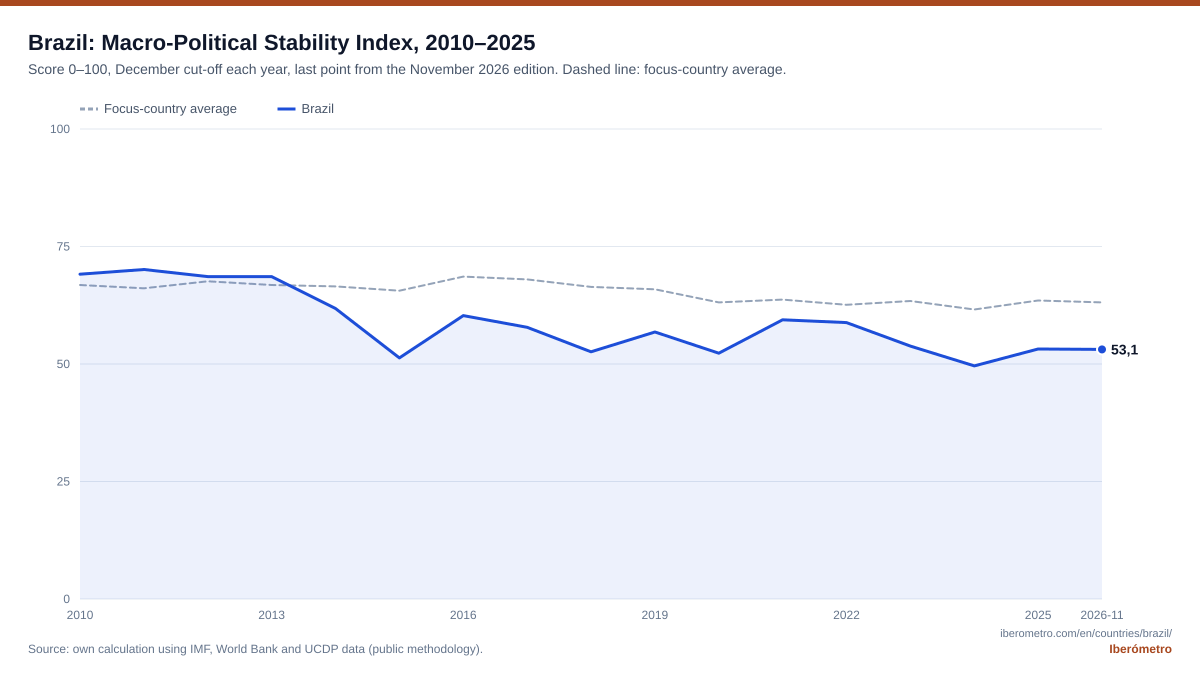
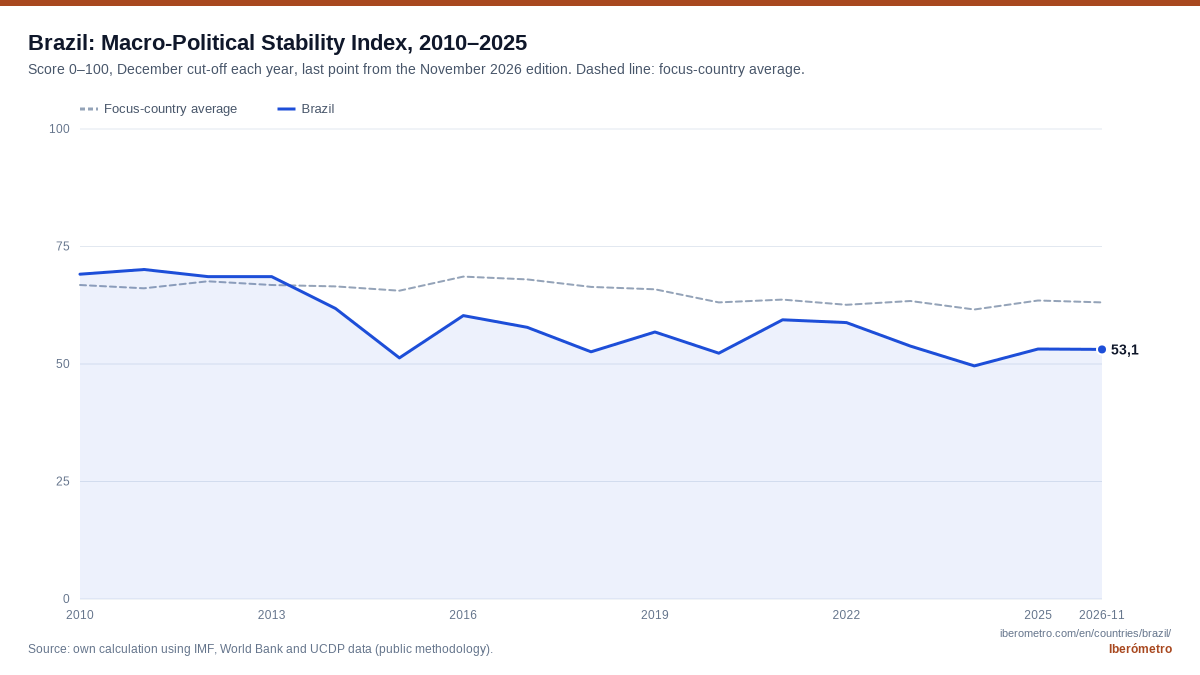
- Brazil: Macro-Political Stability Index, 2010–2025: PNG · SVG · embed
- Mexico: Macro-Political Stability Index, 2010–2025: PNG · SVG · embed
- Venezuela: country risk (EMBIG), monthly average: PNG · SVG · embed
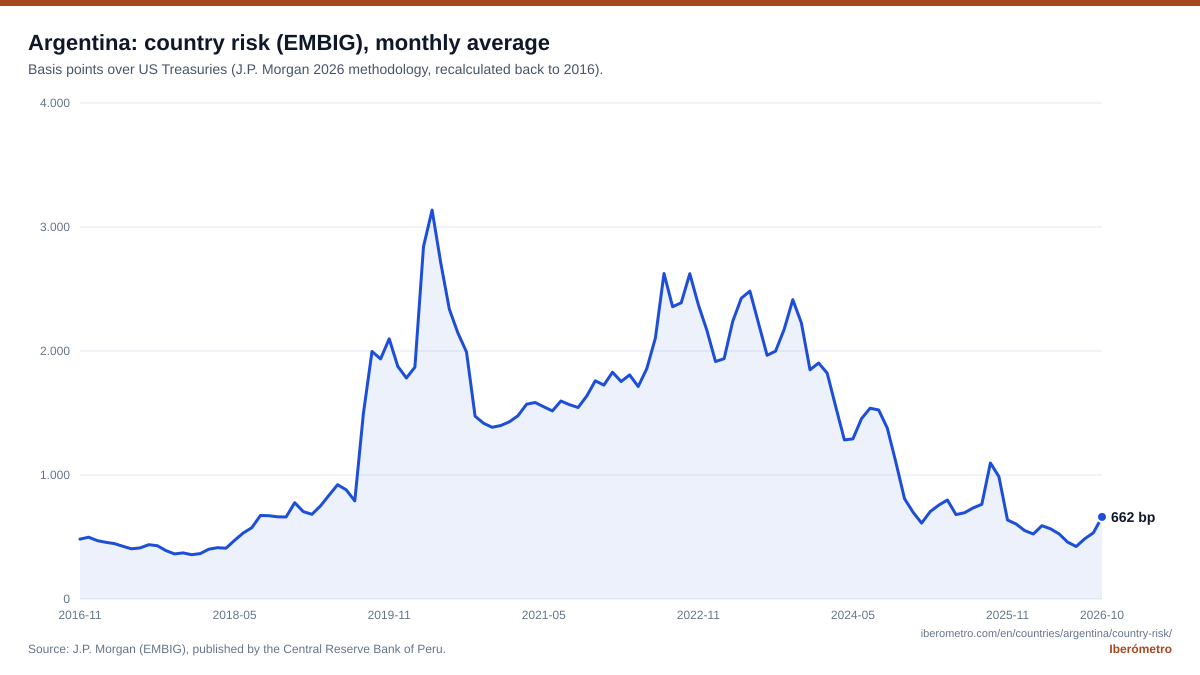
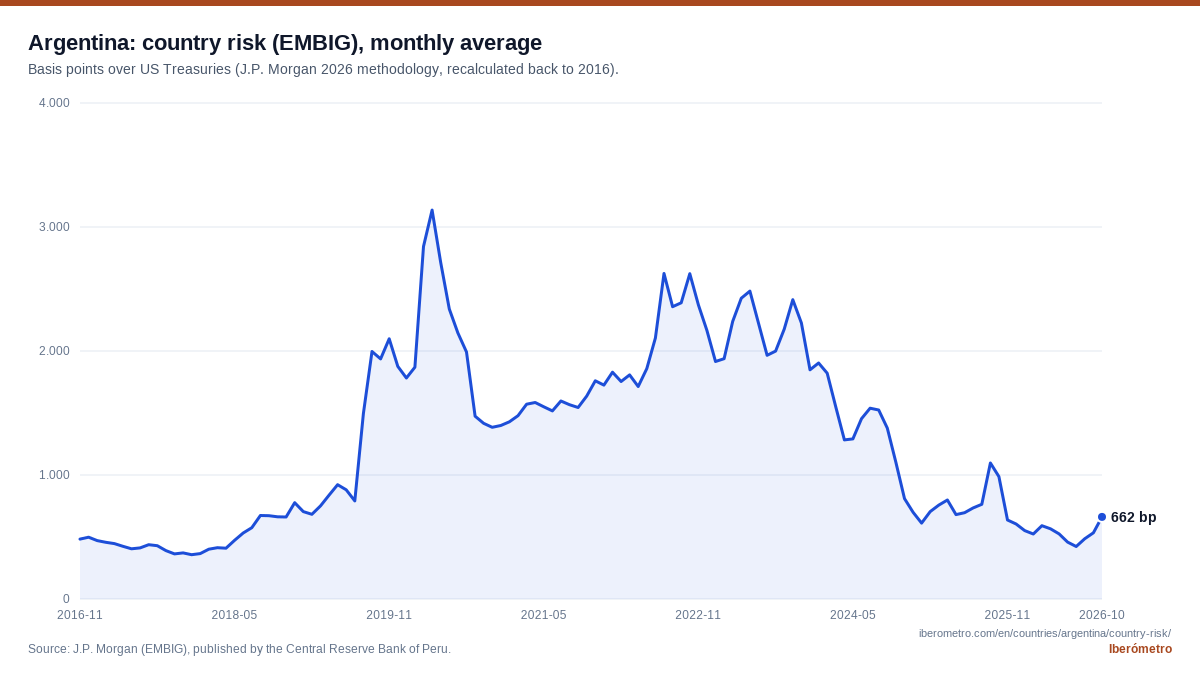
- Argentina: country risk (EMBIG), monthly average: PNG · SVG · embed
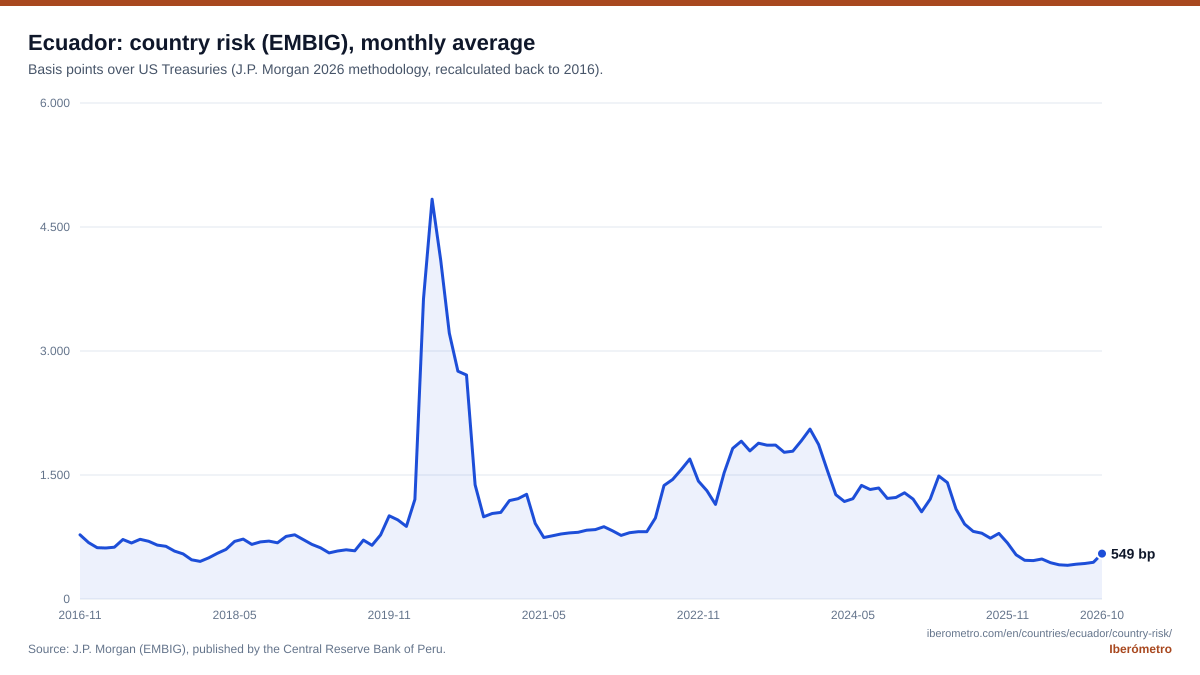
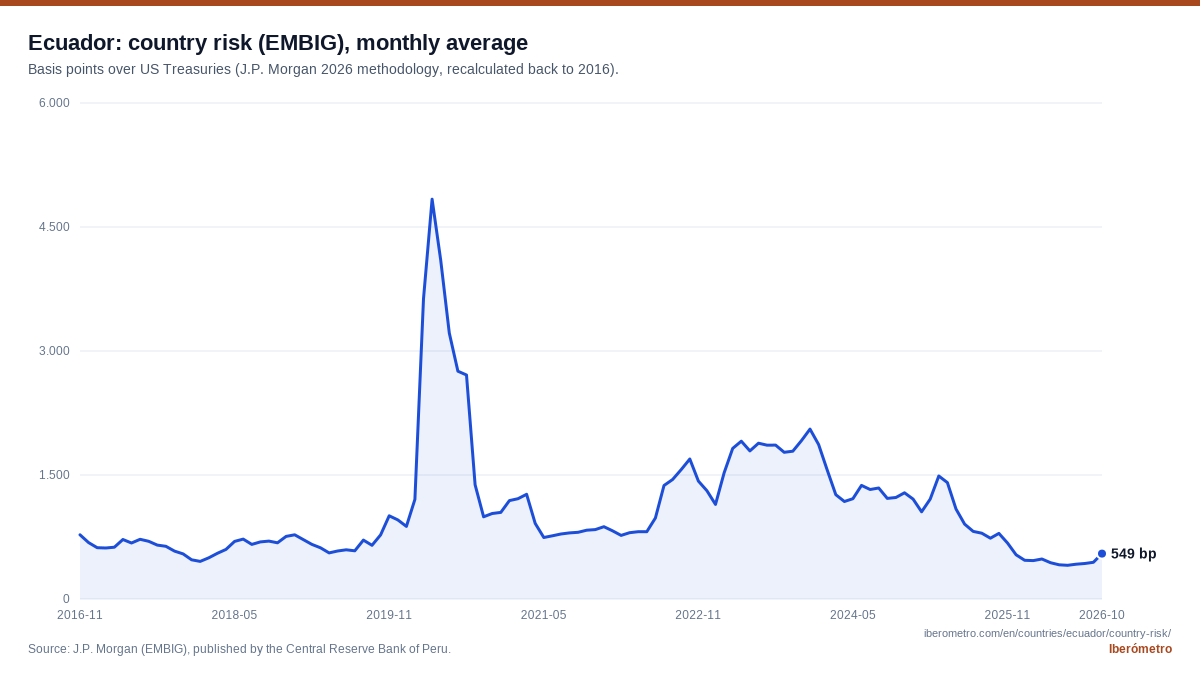
- Ecuador: country risk (EMBIG), monthly average: PNG · SVG · embed
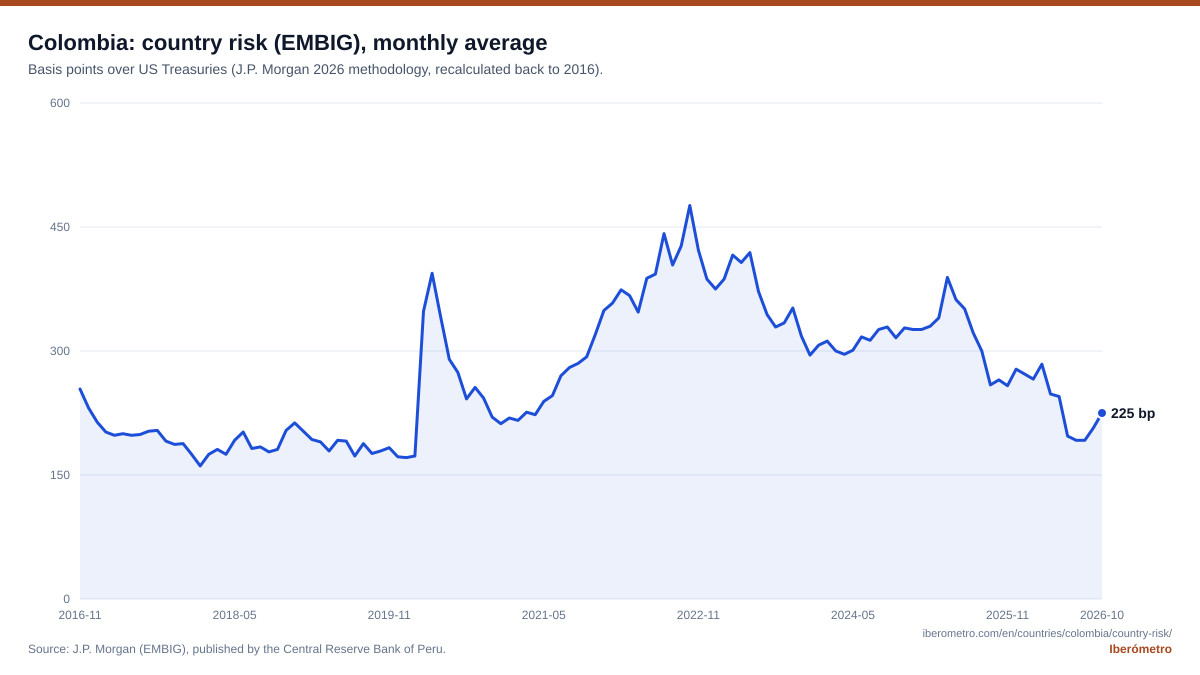
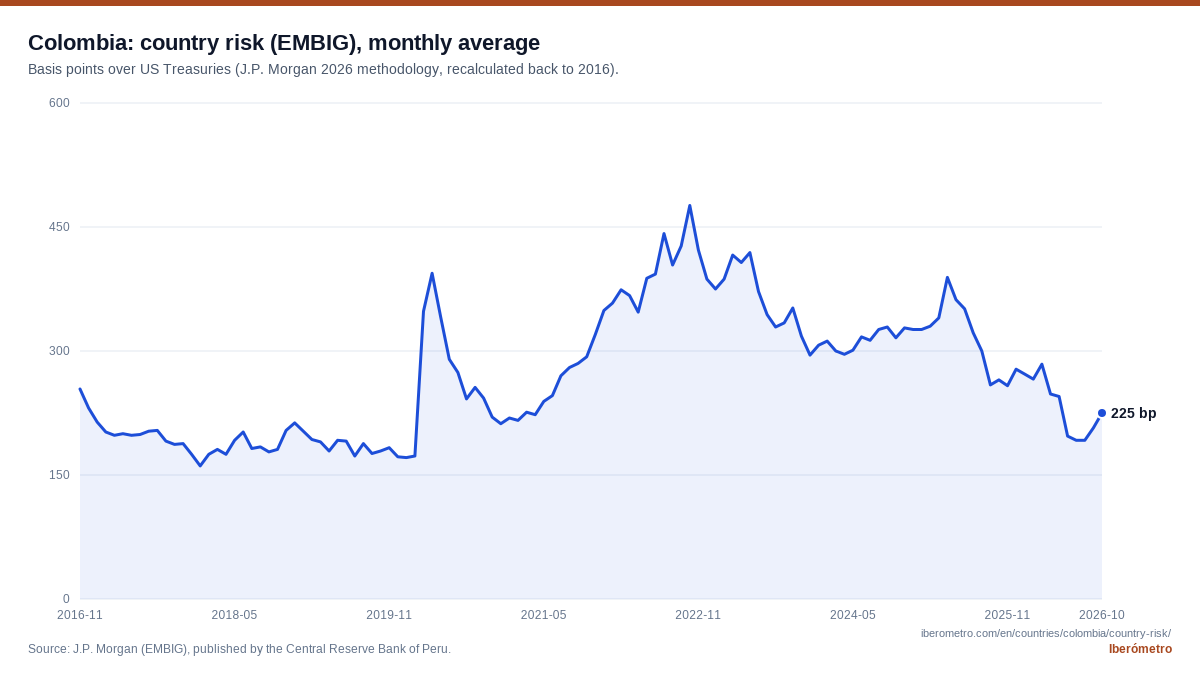
- Colombia: country risk (EMBIG), monthly average: PNG · SVG · embed
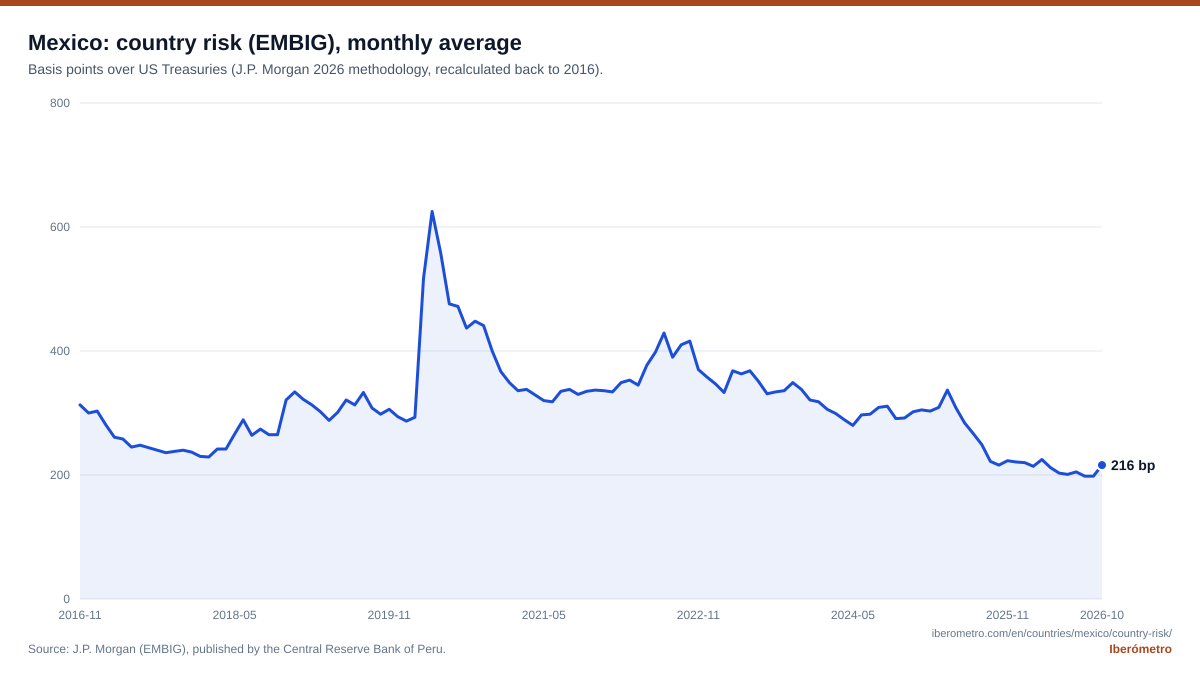
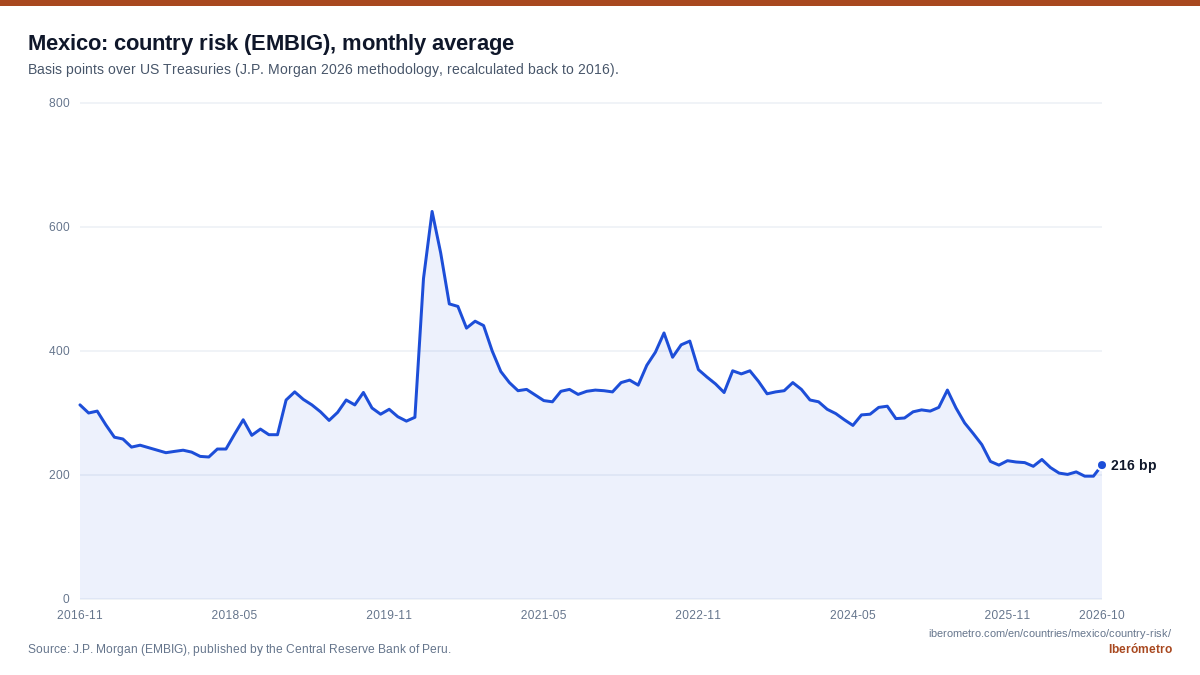
- Mexico: country risk (EMBIG), monthly average: PNG · SVG · embed
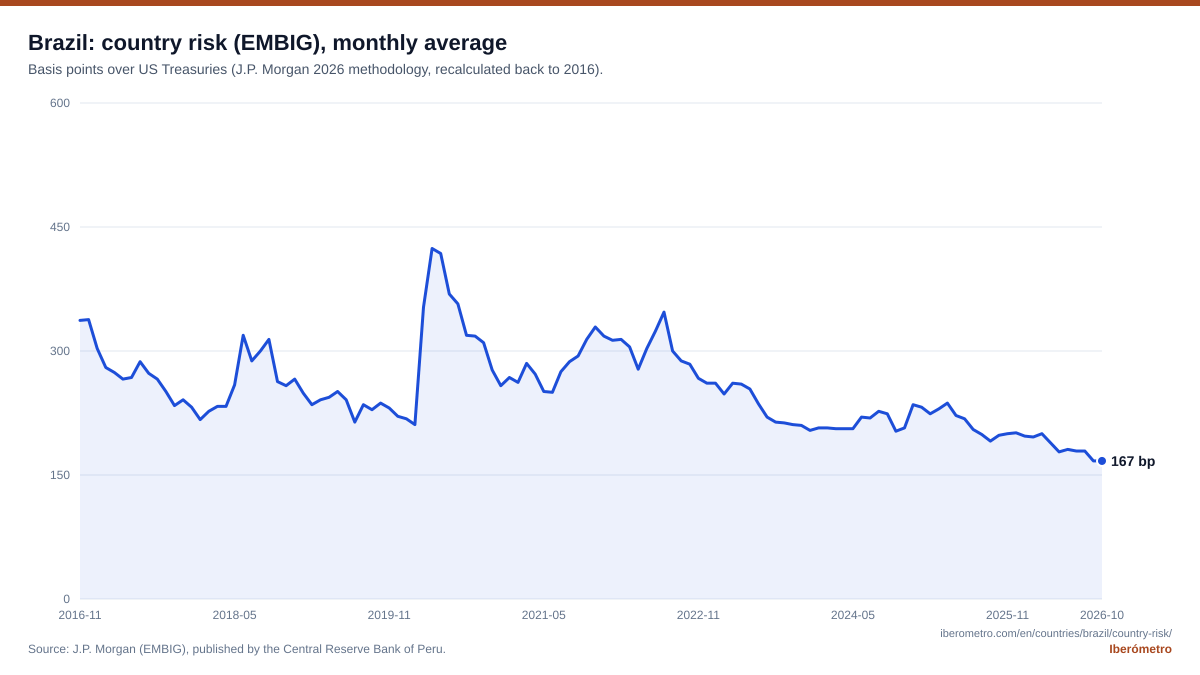
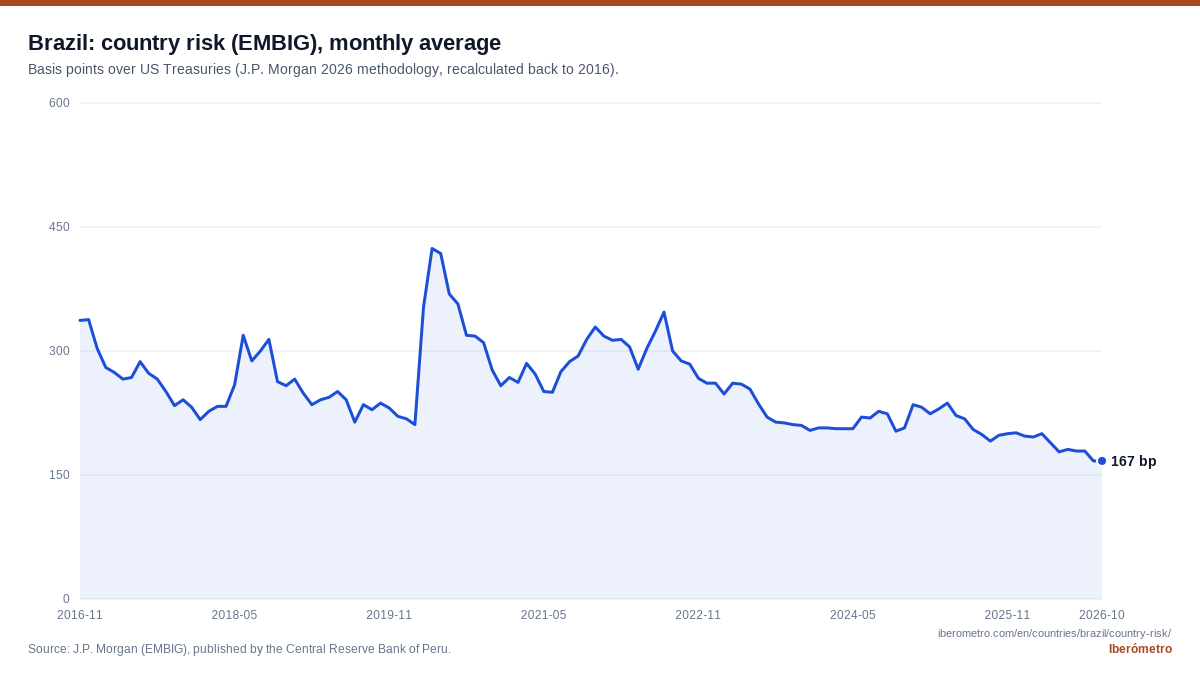
- Brazil: country risk (EMBIG), monthly average: PNG · SVG · embed
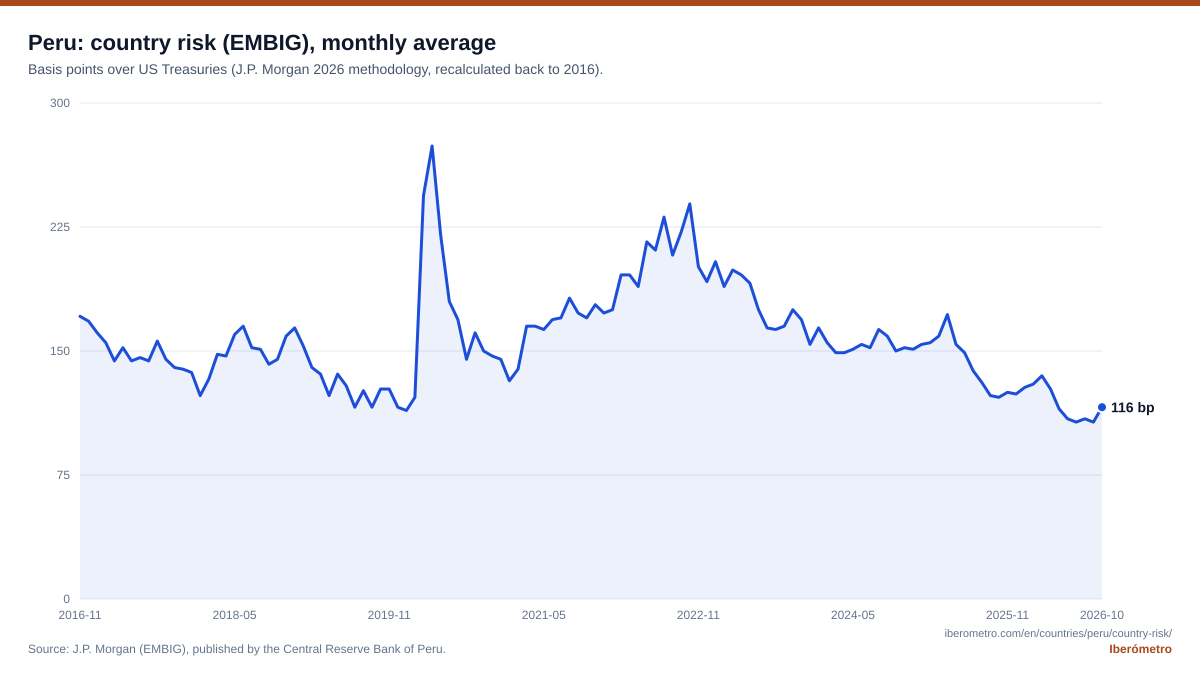
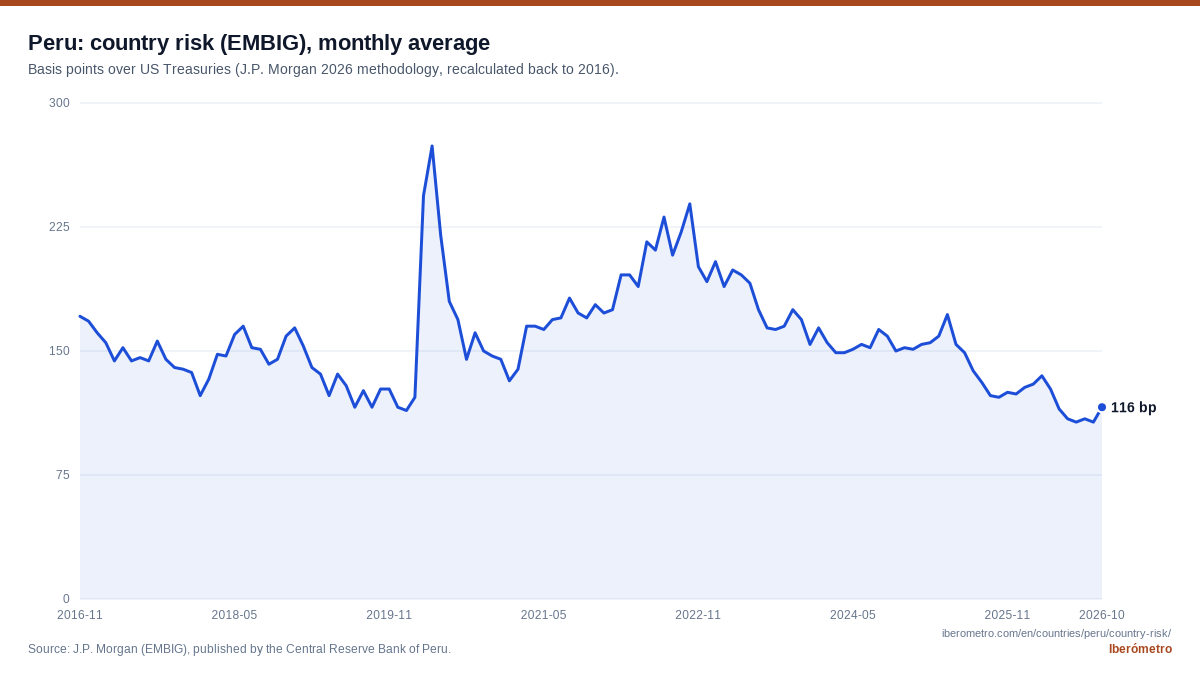
- Peru: country risk (EMBIG), monthly average: PNG · SVG · embed
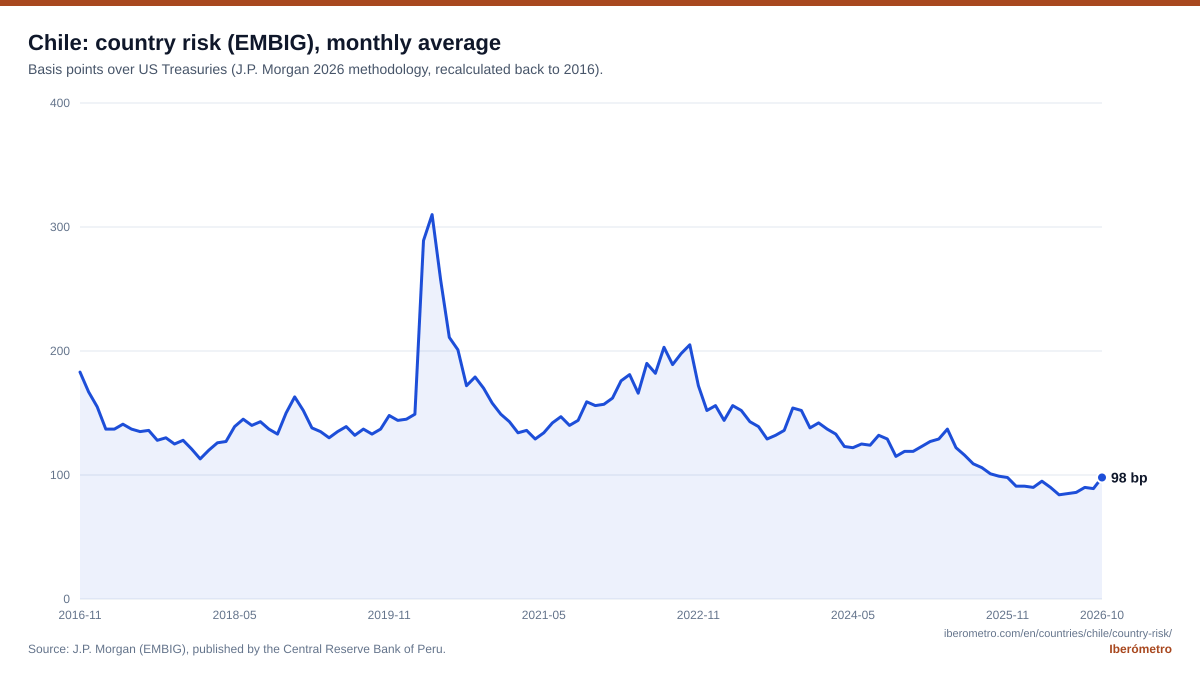
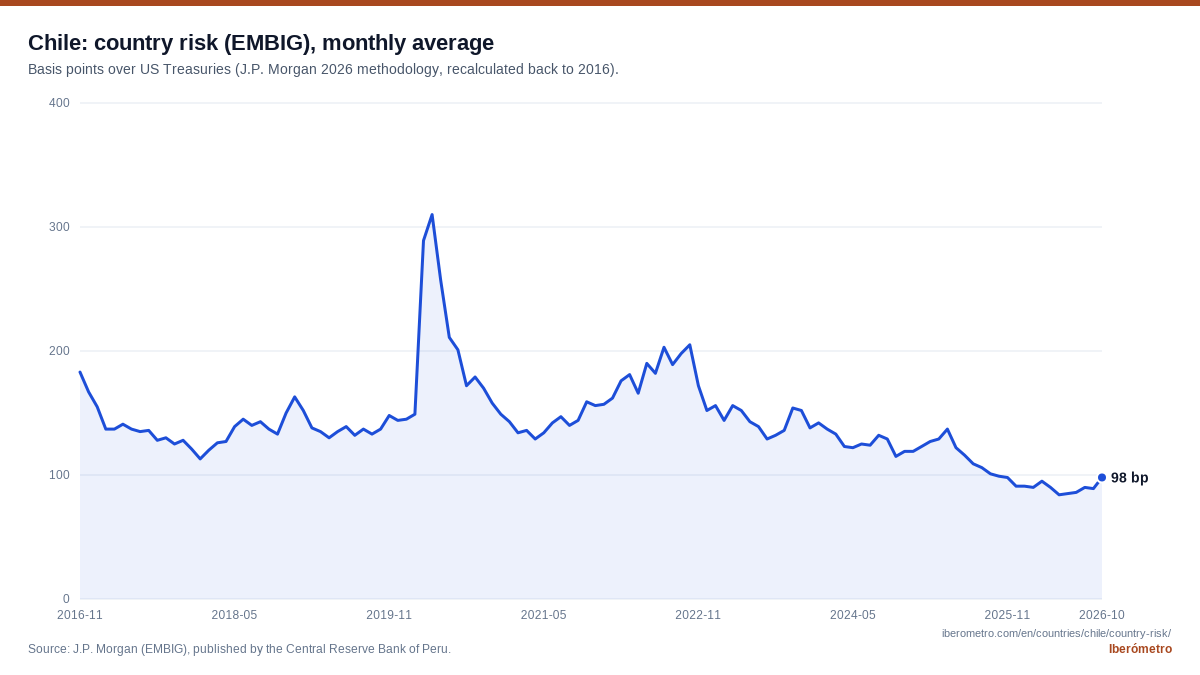
- Chile: country risk (EMBIG), monthly average: PNG · SVG · embed
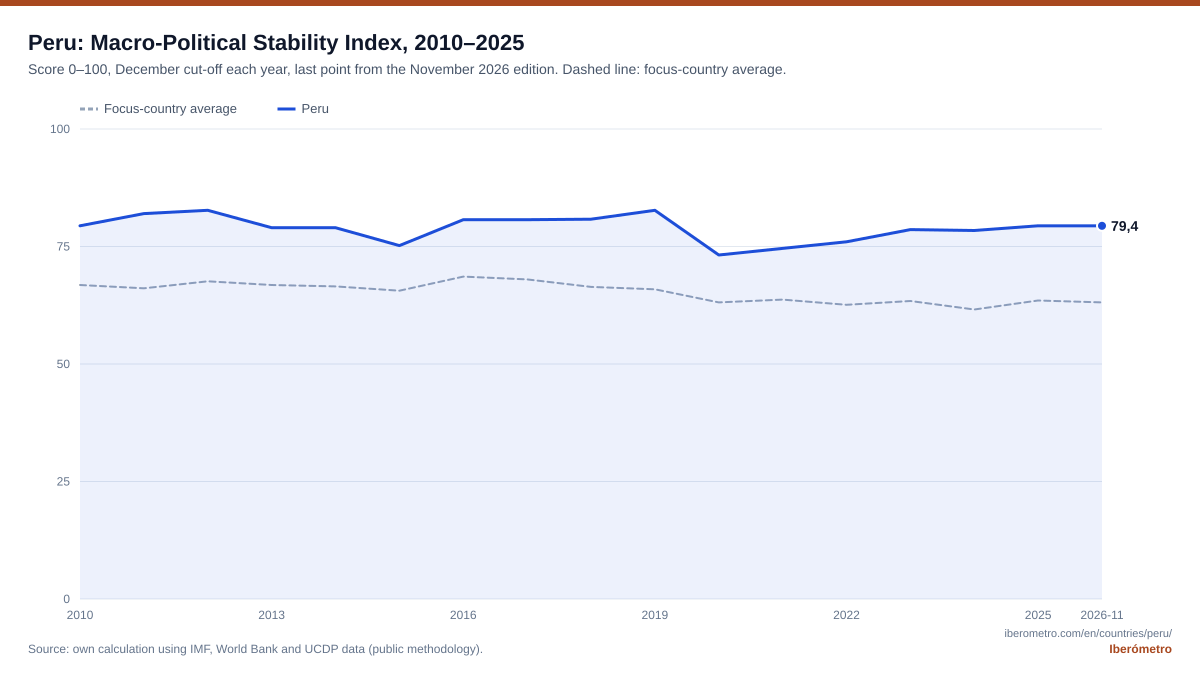
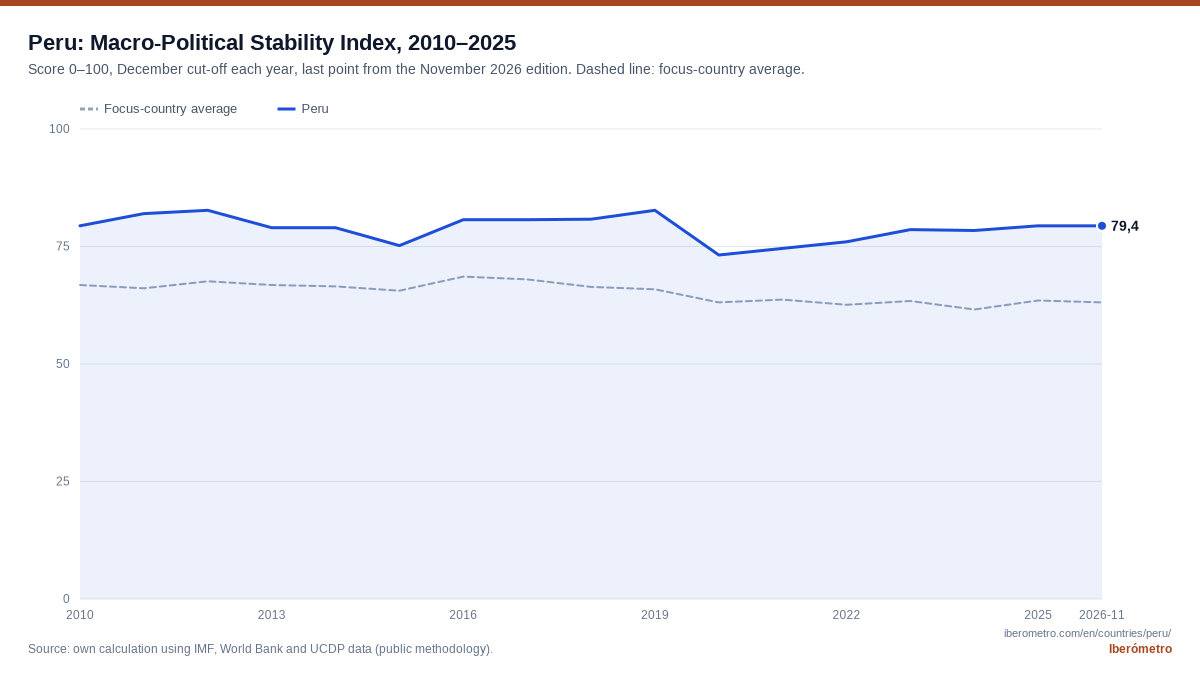
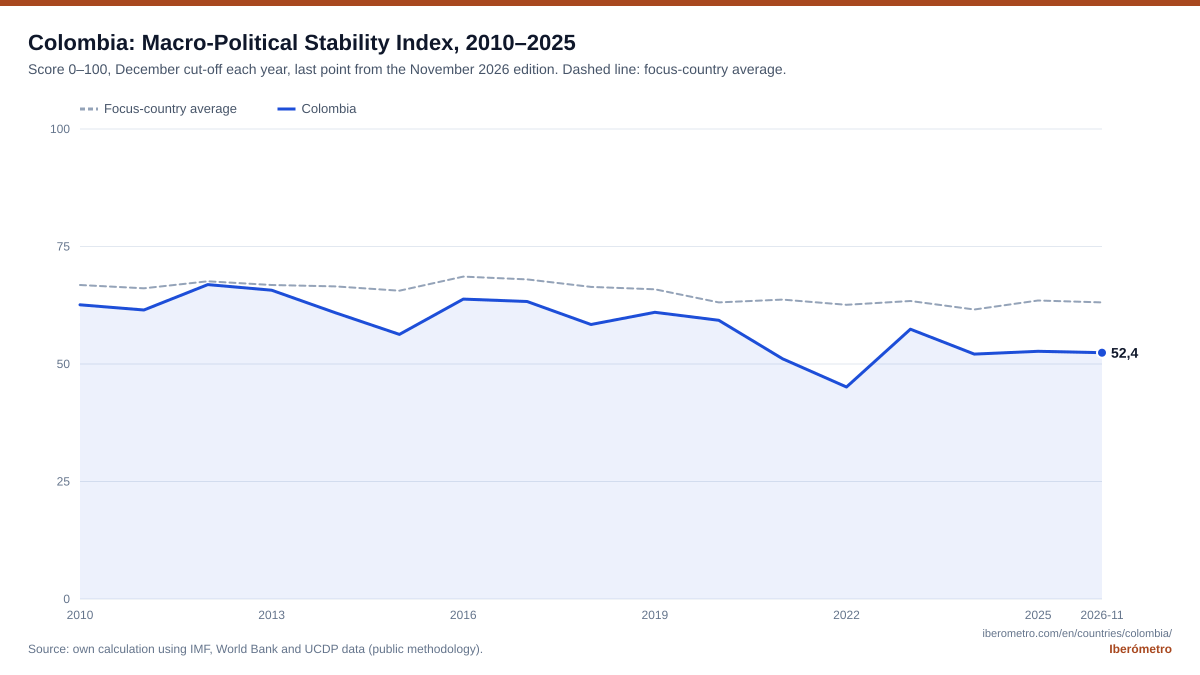
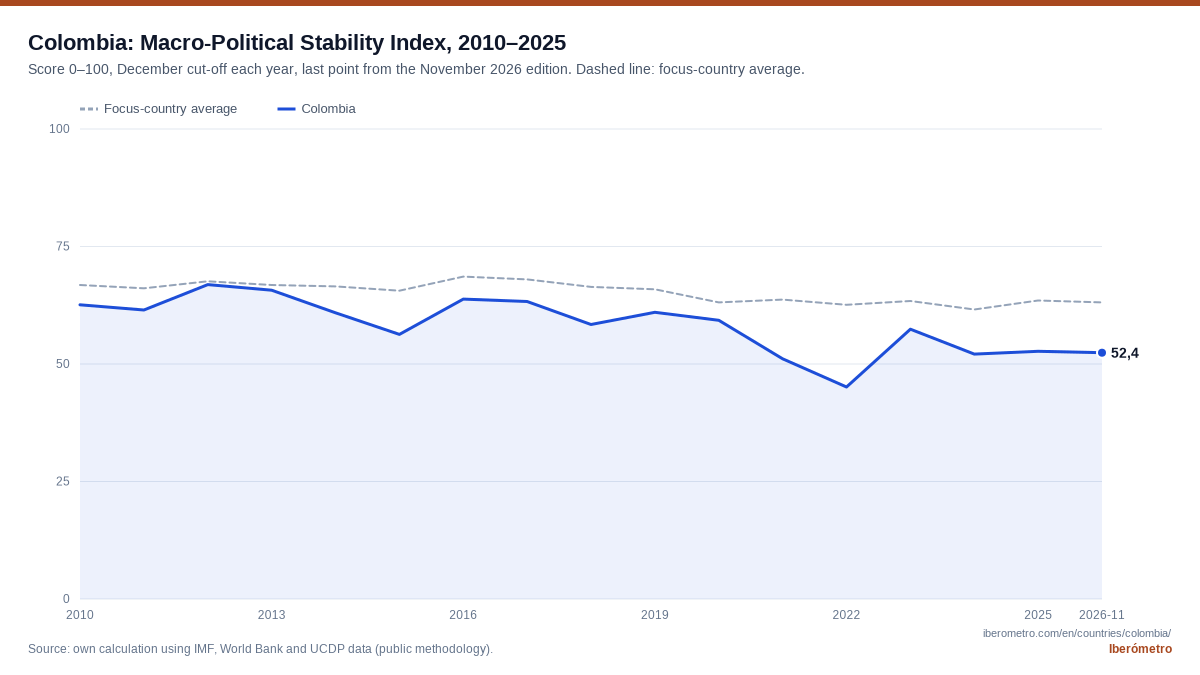
How to cite
Iberómetro (2026). Macro-Political Stability Index, methodology v0. Data updated 2026-11-28. https://iberometro.com/en/index/ (accessed 2026-11-28).
For a specific figure: country, data period, original source and a link to the page (every key figure has an anchor, e.g. #resumen or #ranking ). Monthly editions have a permanent URL: cite the edition when referring to a given month’s data.
Methodology in three lines
- A 0–100 index with 4 pillars (fiscal sustainability, 25%; monetary and external stability, 25%; external liquidity and market access, 20%; political and institutional stability, 30%) for 13 Latin American countries.
- IMF, World Bank and UCDP indicators, normalised with fixed, public thresholds; no subjective assessments.
- Versioned methodology (v0); any change creates a new version with a changelog. Full methodology.
Besides the index: country risk for 8 countries with detected jumps ( country risk), 15 bilateral corridors and tools.
Contact
Questions about the data, corrections or interviews: hola@albertjuera.com.